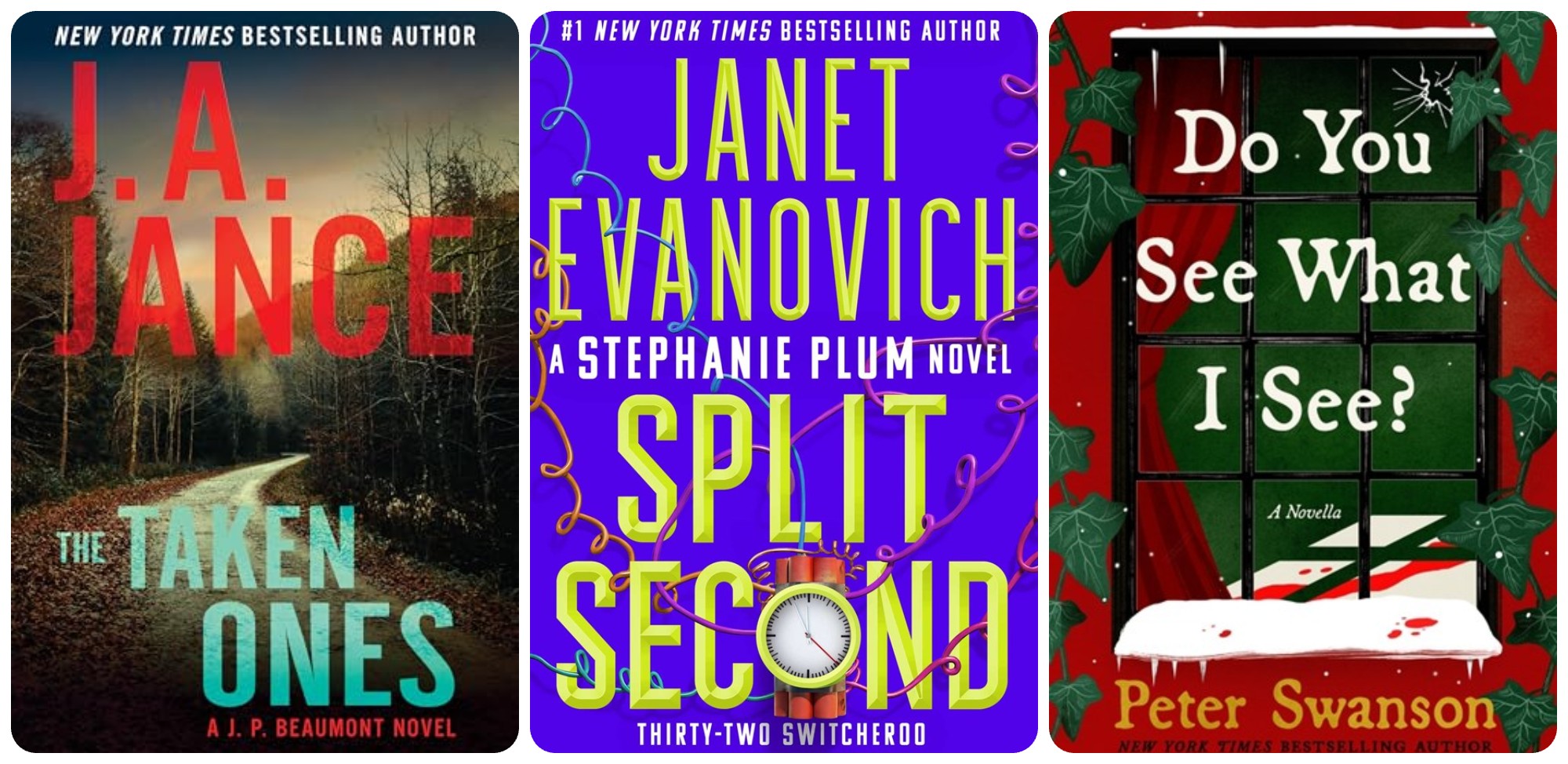
Janet Evanovich – Split Second: 32 Switcheroo (published November 10). For years, I enjoyed the Stephanie Plum series, but it became repetitive, so I put it aside. A couple of years ago, I picked them back up when she finally decided between Ranger and Joe, and I have thoroughly enjoyed the last three books. This book takes place after she marries ******** (purposely vague to avoid spoilers), and I thoroughly enjoyed it. Stephanie is her usual smart-yet-klutzy bounty hunter, blowing up every car she drives; Grandma Mazur is still hilarious, attending every funeral “showing” she can find; and Lula is, as usual, annoying, always wanting to stop for doughnuts and fried chicken. These are best in audio, and it may give you a few giggles.[My only issue with these is that Stephanie’s mother is well on her way to becoming an alcoholic, which isn’t funny.]
J. A. Jance – The Taken Ones. This is the 27th book in the JP Beaumont (“Beau”) series (November release), and I honestly don’t know how Jance keeps these fresh and continues to develop the characters into such likeable people who, using their crackerjack investigative skills, solve the mysteries. In this book, Beau travels to Alaska to help a friend introduced in an earlier book, but enough of the story is set in Washington to keep you updated on his whip-smart wife, Mel, and other friends and family. Some of the investigative parts require a suspension of disbelief, but overall it was a good ride, and I can’t wait for the next book.
Peter Swanson – Do You See What I See? A short, compelling mystery that uses the age-old “country-house locked-room mystery” storyline. This was twisty, and I enjoyed it as much as Swanson’s previous novella, The Christmas Guest. Pick this up if you need something quick for the holidays.
A couple of weeks ago I wrote about the “Battle of the Moriartys” and this time there are two thriller contenders. Which one was the winner? Read on…
Keep Them Close by David Ellis. This one kept me on my toes! I think David Ellis is one of the best thriller writers in the biz, with the nonstop revelations and twists, and this one didn’t disappoint. I’m not sure it’s quite up to the calibre of Look Closer, but I’ll still recommend it. My only minor complaint is that I couldn’t warm up to any of the characters—I admired them, yes (Allison was brilliant), but I wasn’t really rooting for anyone. I hear this is great in audio. Readers who liked The Silent Patient by Alex Michaelides will find this as entertaining, and for more authors similar to Ellis, try books by Peter Swanson (The Kind Worth Killing is excellent) and Alice Feeney’s My Husband’s Wife.
The Unknown by Riley Sager. This author’s books always entice me, but I have a love/hate relationship, as he writes the kind of books I would dearly love to love, but there’s *always* something about the plot or a lack of attention to detail that irritates me, or maybe it’s the nonstop twists that are a few too many. However, I listened to the audiobook, which was very well narrated and, for the most part, kept me engaged. At first, I rated this a 4, then it dipped to a 3 halfway through (mainly because of practical matters that didn’t make sense) and rose back to 4.5 by the end, with its twisty twistiness. Don’t read this expecting in-depth character studies; the only character I could picture was Violet, obviously based on Meryl Streep, and even the narrator mimicked her voice.
I recommend this with reservations, as there are a few trigger warnings, but it was definitely suspenseful and perfect for readers who like a few paranormal experiences that may or may not be happening. Fans of Riley Sager may want to try books by Simone St. James, Ruth Ware, and Sarah Pinborough’s We Live Here Now.
Who was the victor? If Riley Sager had been a little better with his one-to-two-too-many implausible twists, it would have been a tie, so I’m giving this one to David Ellis, but both are worth reading if you need something compelling and fast.
This week I read two novels by authors with the same last name, Moriarty, one from Australia and the other from the US. One I had looked forward to for months, and the other was a last-minute decision, as I had heard it was good. So who won? Read on…
Big Little Truths by Liane Moriarty. Twelve years ago, I was engrossed in the previous book in this series, Big Little Lies, which became a huge bestseller and TV series. I was thrilled to hear she had written a sequel with the same characters in the same Australian beach town setting, only taking place ten years later, with the kids now teenagers and all that entails, including angst and ‘tude. And it was fine. I think I would have enjoyed it more because, even though the author has reassured readers that it wasn’t necessary to reread the previous book, I wished I had (something that I abhor doing), because it took a good third of the book to figure out who was who and what had happened. Once I settled in, it became compelling, with a gut-punch ending.
Sunlight Finds You by Laura Moriarty. Now this one, this one is special. There was something about this book that clutched at my heart and never let go. We meet Nora as a teen when she falls in love with Leonard, and follow the choices they make as they navigate adulthood, exploring forbidden love amid the shame and impossible choices women faced in the 1950s. The emotional roller coaster kept me reading, and yes, I went through a few tissues. I don’t want to say more about the plot as it would be a spoiler, but I did love the book references, and it was no surprise that Nora became a librarian. The writing and the way the plot unspooled reminded me of the novels by Janelle Brown and Cynthia Sweeney, and maybe even of The Notebook by Nicholas Sparks, although it’s much more complex than that. And this one could be a little controversial, but I think readers who loved The Women by Kristin Hannah may find a similar epic reading experience.
So if you can’t tell, Laura Moriarty was the clear winner although both are worth reading.
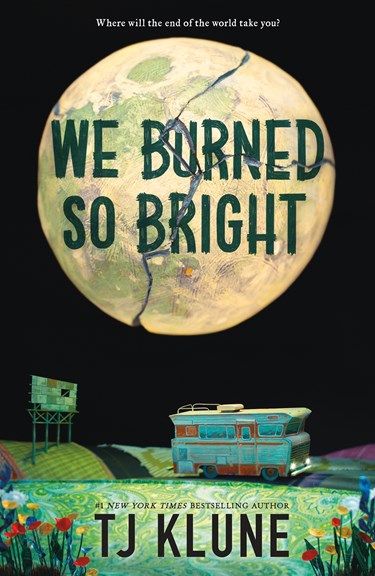
We Burned So Bright by T. J. Klune. A wandering black hole will soon absorb the Earth, so husbands Don and Rodney, both in their 70s, board their RV to go on an odyssey from Maine to Washington. As they travel across the US to fulfil their goal, they meet various people with differing views on the end of the world. If you’ve read Klune’s House in the Cerulean Sea, and others, be forewarned that this has a very different tone and will most likely bring on a tear or two. This reminded me of Cormac McCarthy’s The Road, minus the violence and darkness.
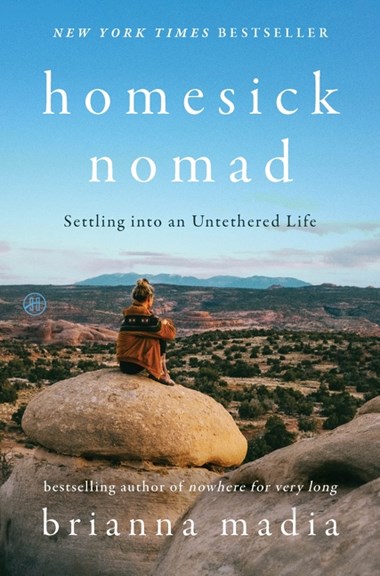
Homesick Nomad by Brianna Madia. This is a sequel to the author’s first two memoirs, Nowhere for Very Long and Never Leave the Dogs Behind. Madia is a free spirit who wandered around the Southwest (primarily Utah) before settling down (sort of) in the Moab, UT, area. Along the way, she gets a divorce, has a scandal involving her dog, and, in this book, resolves the dog scandal and its fallout and remarries. At first, you will find her irritating, but in the third book, a slow admiration will develop.
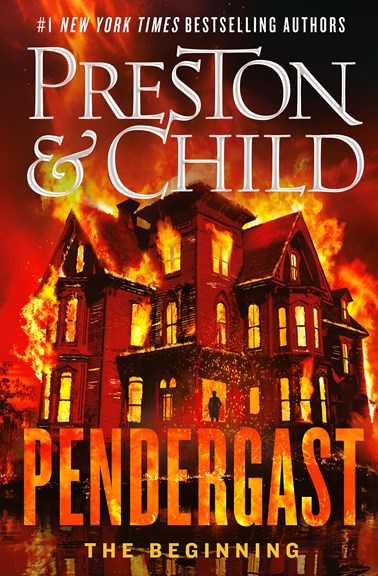
Pendergast by Douglas Preston/Lincoln Child. This is the 23rd book in the Agent Aloysius Pendergast series set in Louisiana, but this title goes back to the beginning of the series, when the suave and savvy agent started his career. They are compelling thrillers, and many have an element of the paranormal. If you decide to try them, you can read this first, but then go back and read in order, if possible; they are excellent in audio format. Readers who enjoy Riley Sager, Dan Brown, and James Rollins may enjoy these.
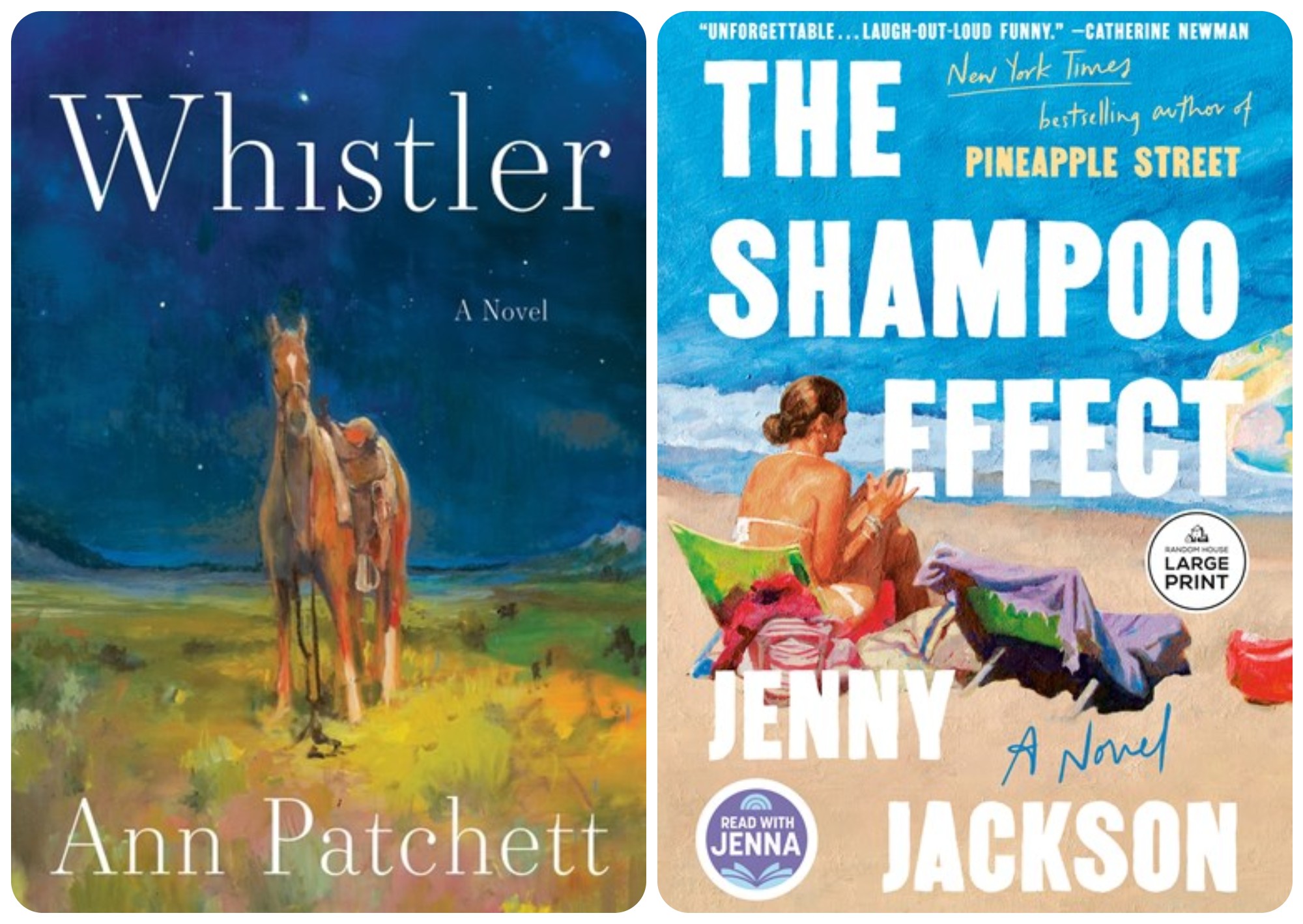
Whistler by Ann Patchett: Ann Patchett is a beautiful writer who creates characters we come to love. For the most part, this was quietly compelling and powerful in its portrayal of relationships and themes. While I liked both Daphne and her former stepfather, Eddie, their current relationship was a little unsettling at times. Although I have thoughts about why, I won’t say, because it would be a spoiler. This story will make you think about relationships that, while brief, made an impact on your life.
Shampoo Effect by Jennie Jackson: This is a sudsy, soap-opera-ish story about a tight-knit group of spoiled, entitled 30-something friends in a Massachusetts coastal town. When Caroline, a new girlfriend of one of the male friends, arrives to live in a cottage for a fellowship, the situation quickly lathers into a tangled mess of relationships and secrets. It comes to a head when Caroline writes a thinly disguised short story published in a national magazine.
This was a fast-paced read that infuriated me with its snobby, sometimes mean-spirited characters, and even though I didn’t end up loving them, I at least understood their situation. It reminded me a bit of books by Elin Hilderbrand (mainly because of the beach setting), without the ritzy setting, and it’s also good for fans of Cynthia Sweeney, Sarah Damoff, and Catherine Newman.
Interesting note that I wish I had known before I started the story. The town and its famous resident author are based on the author John Updike, who published the novel “Couples,” a thinly disguised exposé of the town.
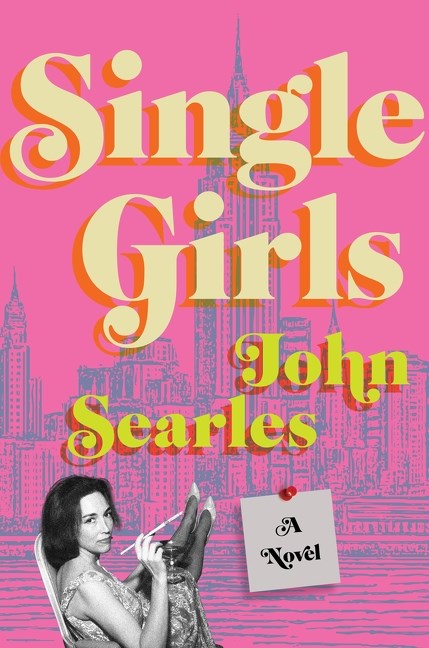
Today’s blog background is pink in honor of the July 7 publication of Single Girls by John Searles.
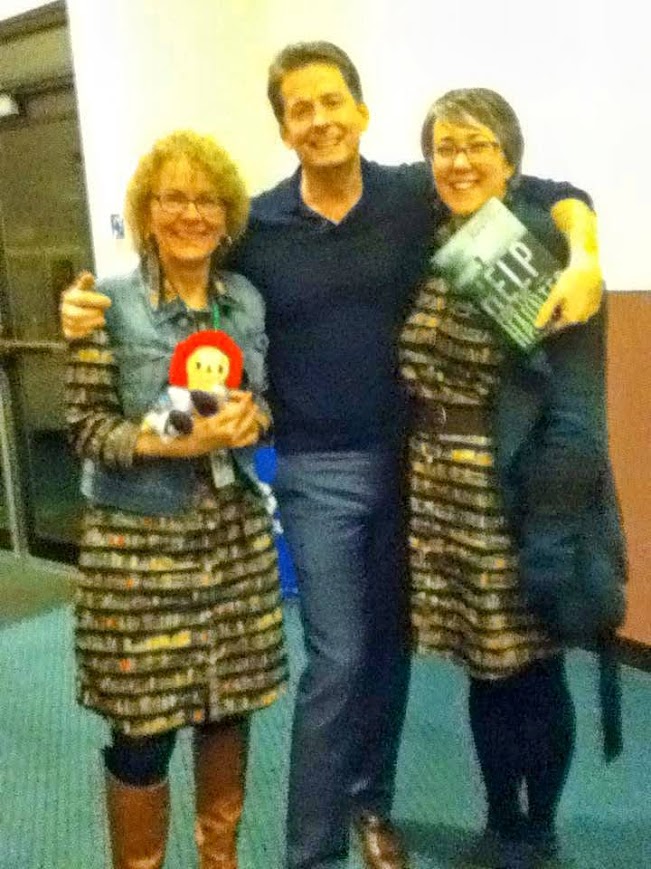
John Searles appeared at the Salem Public Library in 2014 to promote Help for the Haunted, and we discovered that not only is he a talented author, he’s also a super nice guy.
His next book is a novel about Helen Gurley Brown, the editor who took Cosmopolitan magazine to new heights of popularity by understanding her target audience and pushing the boundaries of what was acceptable to print in the 1960s. Single Girls traces her early life, where she started her career as an advocate for the sex lives of single women by publishing Sex and the Single Girl in 1962. It continues with how she transformed a failing magazine into Cosmopolitan, a magazine many have known and loved over the years. John Searles knew and worked with HGB for 25 years and is more than qualified to write this fascinating tribute to her journey of becoming a powerful woman.
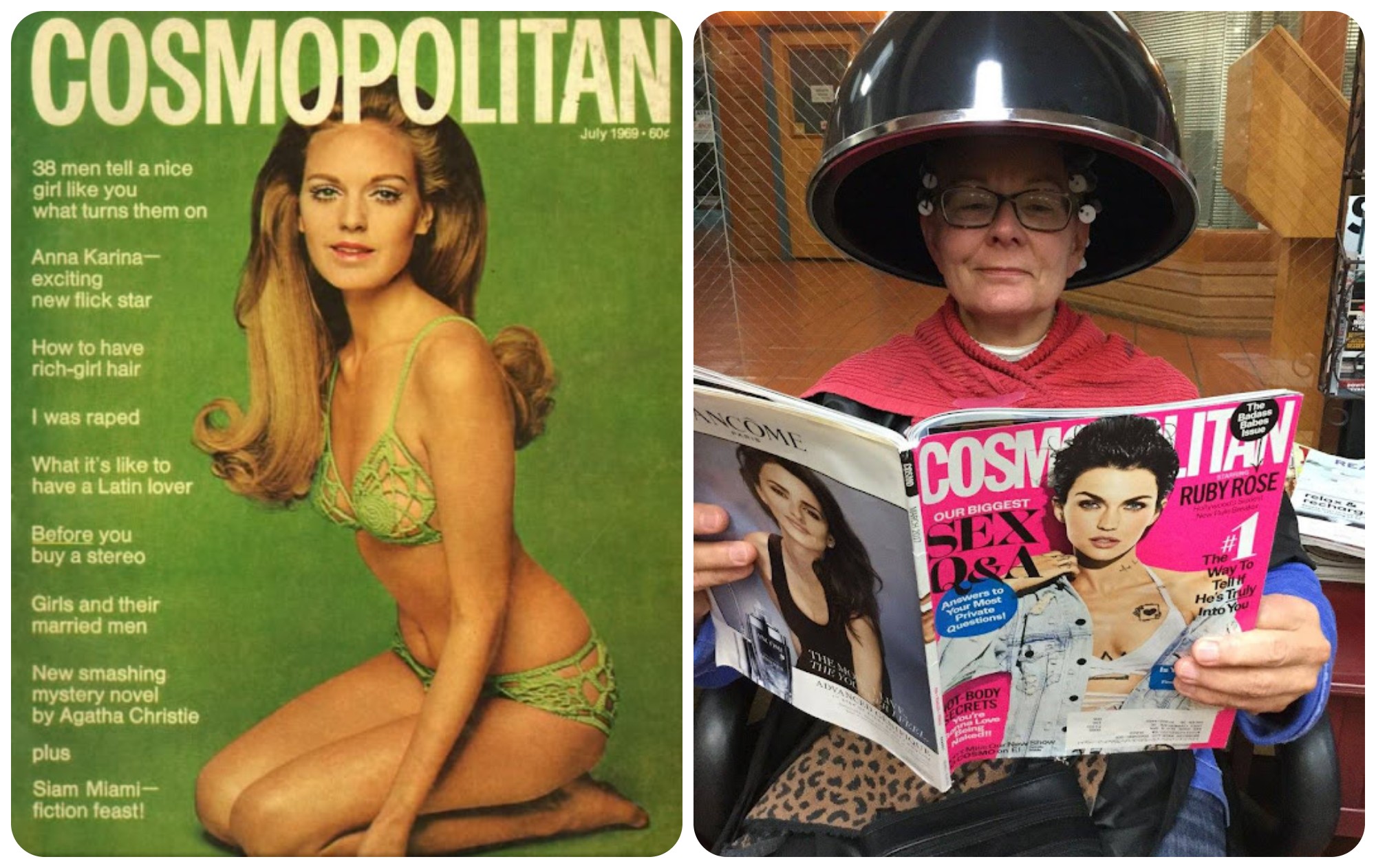
As a young teen in the mid-1960s, I was a little “young” to appreciate this magazine (but I do remember the cover with the crochet bikini), and since I married on my 20th birthday, I never felt like I was the intended demographic for the articles, but I went on to avidly read it whenever I went to the hair salon. Does anyone remember when the covers with the scandalous article titles were censored at the supermarket checkout line by placing metal shields over the bottom 2/3 of the magazine?
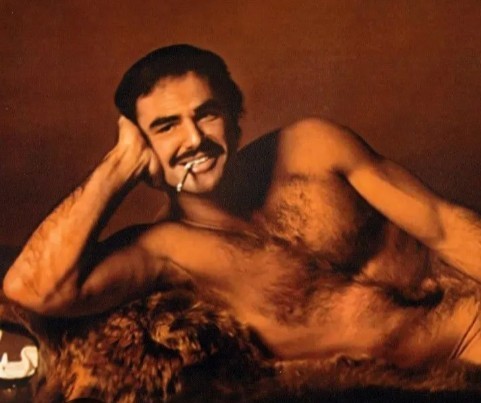
And, if you were around in 1972, who can forget the iconic poster of Burt Reynolds as the Cosmopolitan centerfold, wearing nothing but a smile, a lot of body hair, and a droopy cigar?
Even if you have never opened an issue of Cosmopolitan and know nothing about HGB, I highly recommend John’s book. It is chock-full of memorable and compelling characters (not the least is HGB’s famous movie director husband), a trip back in a time machine that looks at the culture of the 1960s, and a charming, funny, and sassy novel about an amazing woman.
[I don’t often recommend this, but read the “Afterword” before the book; it will give you a better idea of why the author is qualified to write it, along with some notes on structure.]
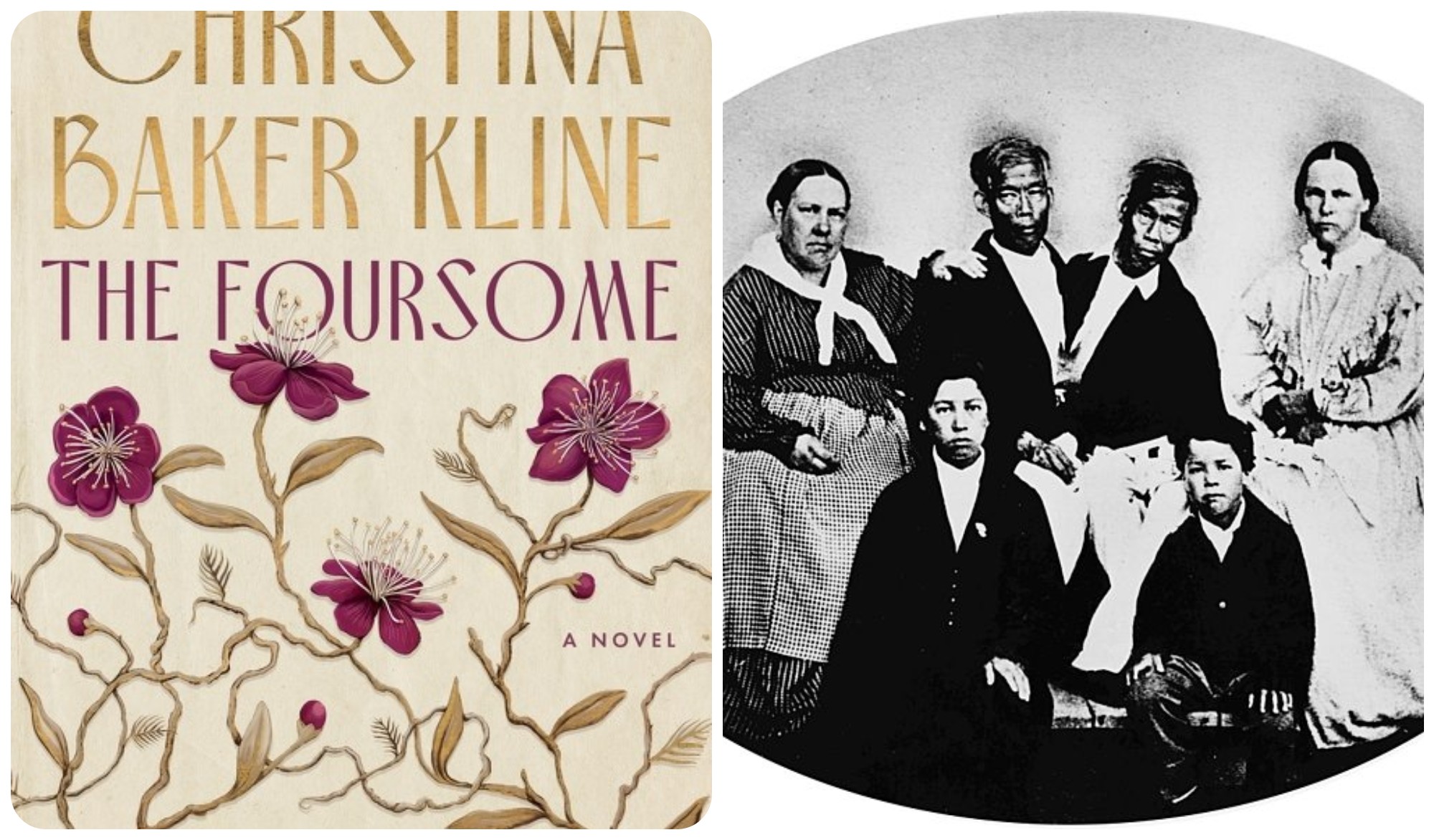
The Foursome by Christina Baker Kline: This historical novel about the marriages of the famous conjoined twins, Chang and Eng Bunker, is fascinating, informative, and respectful; the author (a distant relation to the twins) never resorts to sensationalism or melodrama. I have always been fascinated by the history of Chang and Eng, and told from the perspective of Eng’s Wife, Sarah (her sister, Adelaide married Chang), the reader is inserted into the inner workings of the marriage including intimate relations, children (21 total for both brothers!), along with the history of the time, including slavery, women’s rights, bigotry over interracial marraige, and the Civil War. I was absorbed from start to finish, and the ending was quite emotional. I have enjoyed all of Kline’s books, but this is my favorite.
Recommended for readers who enjoy Ariel Lawhon, Melanie Benjamin, and even Kristin Hannah.
Side Note: This comment is not meant to denigrate the book or make light of the hardships, but there were times the storytelling gave “Little House on the Prairie” vibes, mainly because of the farming and food-raising descriptions, and honestly, that wasn’t such a bad thing.
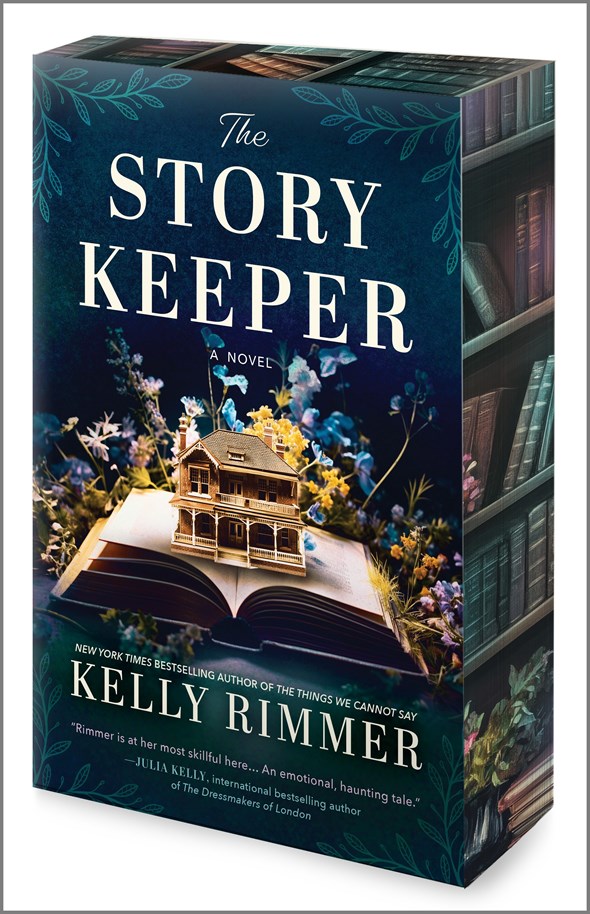
The Story Keeper by Kelly Rimmer. This is a compelling gothic-toned novel set in contemporary Australia. Recently divorced 50-something Fiona, a successful architect, buys her late uncle’s decaying country estate with plans to refurbish it, but various things start getting in her way, including her mother, who is adamant that she not live there, and locals who fear the place is haunted. Fiona discovers a novel that appears to be set in the house, and from there it becomes a dual-timeline story, with chapters from the book woven into the narrative. At about a third of the way through the book, it’s apparent where the story is going, but that didn’t stop me from racing through the pages. This is a perfect readalike for Kate Morton, although not quite as complicated, and fans of Lucinda Riley will also enjoy this. (To be published in late July.)
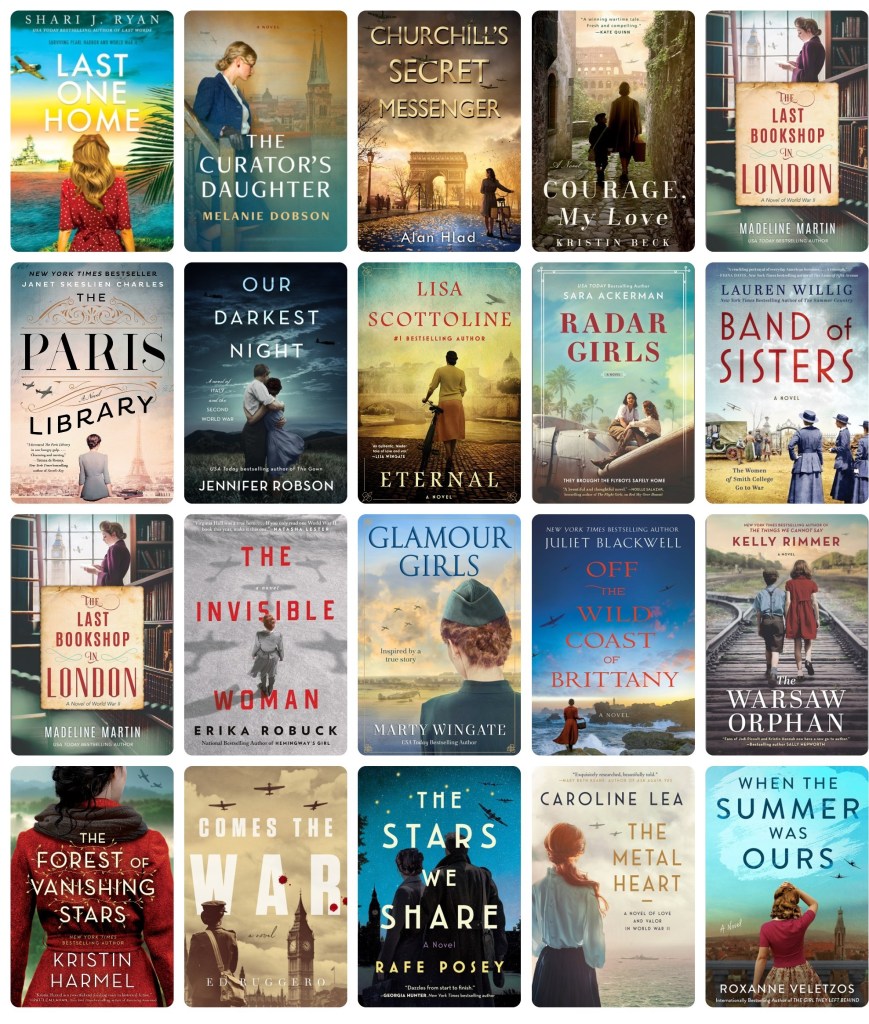
A few years ago, I created a post on similar book covers. There are more trends I could add, but one thing that hasn’t changed is the “women’s backs to the viewer,” although there may be other objects in the background besides aircraft. I could spend days culling more book covers, but I think there’s enough in this post.
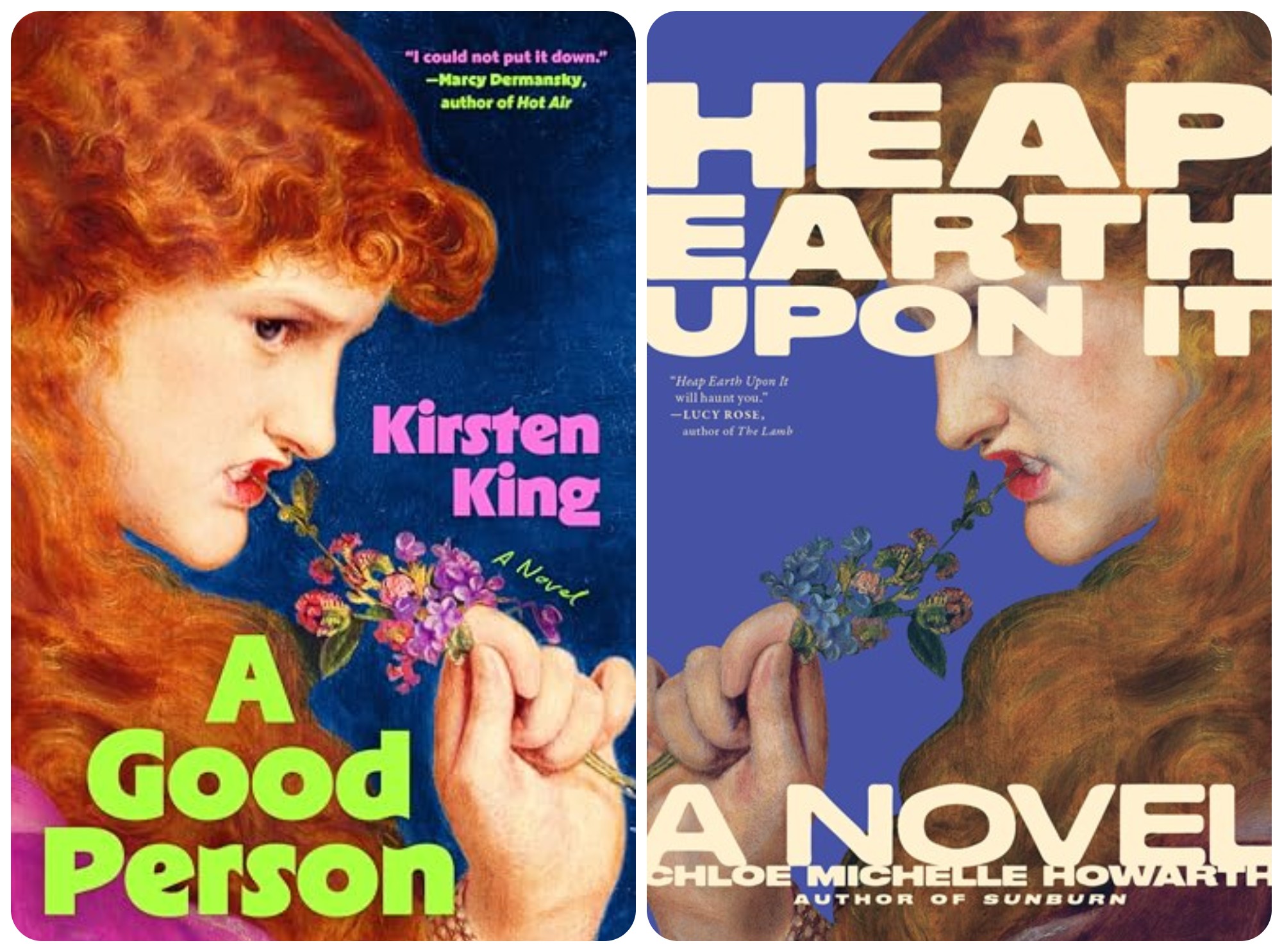
I do have one more to add that intrigued me, mainly because I hated the cover art. I saw the new novel, A Good Person, and realized I had seen this particular work of art on the cover of another novel, but couldn’t remember its name. A few weeks ago, I was wandering around Barnes and Noble, and there it was! Here is the new addition to this post, and if you missed the original, it is repeated below.
How many of you have browsed the shelves at the library (pre-quarantine, natch) and picked up a book only to discard it, thinking you had read it? Don’t be so quick to judge! Check out the inside flap before reshelving, as it’s entirely possible the title has a “copycat” jacket with the publisher using a similar font and graphics similar to another popular book. It’s more common than you might think, with some even using the same photograph, as seen in the article Why Do So Many Book Covers Look the Same? Blame Getty Images. Here’s a small sample of the image used for two very different books but check out the article for at least ten books that used the same graphic.
Another interesting article, 57 Books That Look Like Other Books, is worth reading to see the various cover trends over the past few years. Here’s a sample. Hmm, I wonder which book graphic was copied.
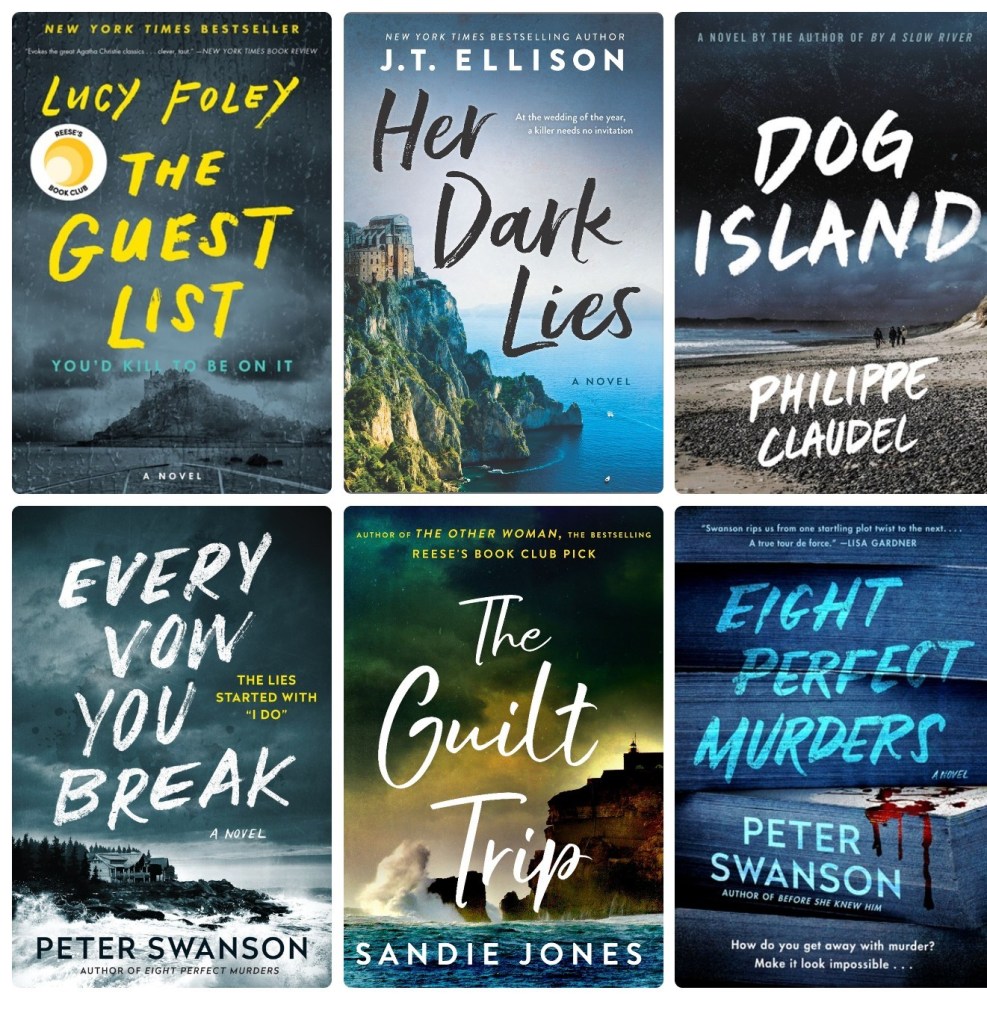
This trend has interested me for years, but it wasn’t until I read Lucy Foley’s The Guest List that I started collecting graphics of books with similar covers. Here is my collage of recent thrillers. [Update: this trend is still popular for suspense/psychological thrillers.]
Here’s another cover trend for books set in a world war (usually), featuring characters on the cover (mostly with their backs to the viewer) and planes (or a plane) in the sky.
So don’t think your mind is going south if you can’t remember if you’ve read a particular book; it’s most likely that you are picking up a book with a copycat cover!
Before I continue with what I read over the course of my high school years, I have a puzzle I’ve never figured out, and probably never will. So the librarian at the Cottage Grove Library was “Miss Clark,” a stick-thin woman who I thought of as “elderly,” but who was probably in her 50s, maybe early 60s. A number of years later, she retired and was replaced by her daughter, also, “Miss Clark.” OK, so if the first librarian had a daughter, why was she “MISS Clark”? Today, I wouldn’t think much about it, but this was the early 1960s!
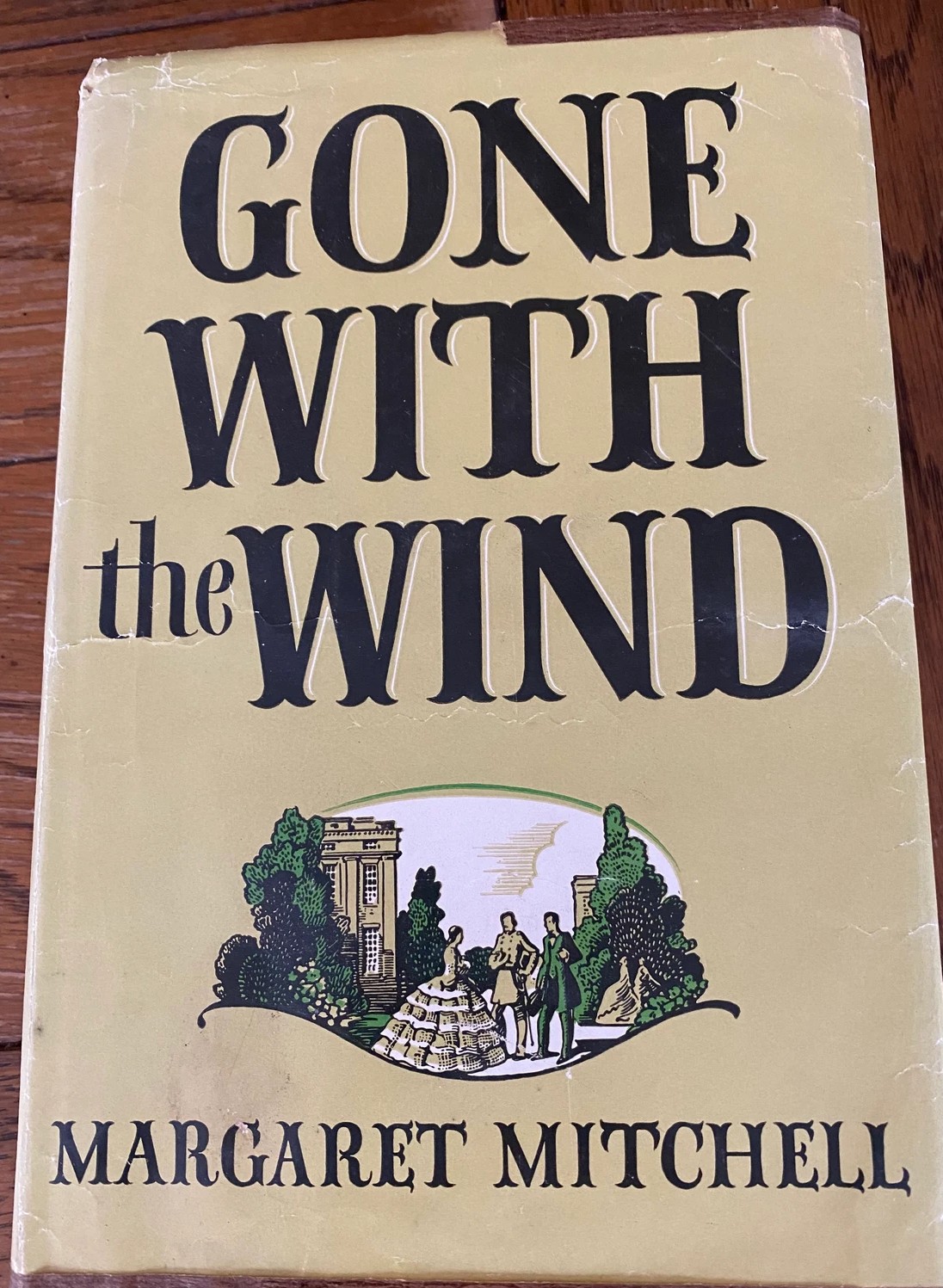
As I headed into my mid-teens, I had read all of the Harold Robbins and Victoria Holt books I could find, so it was time to focus on more “mature” reading. During the summer between 8th and 9th grades, I picked pole beans for school clothes money and read Gone With the Wind while “laying out” in the backyard (slathered in baby oil, natch). It was tough going, mainly because the edition I was reading had double-column text, but I struggled through, immersing myself in Civil War times with Scarlett and the gang.
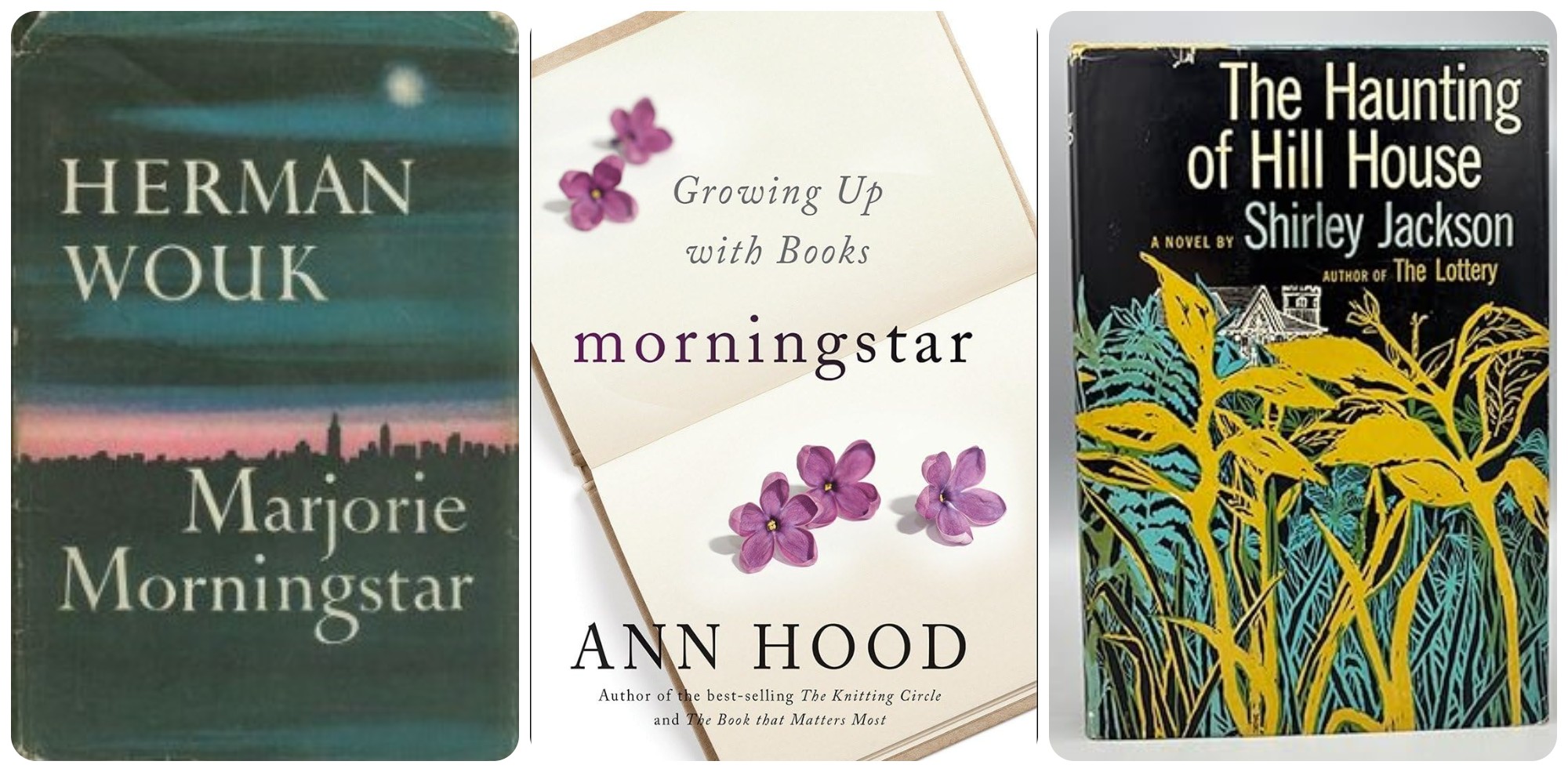
Other books I remember reading during my teen years included I Capture the Castle by Dodie Smith, which I loved because it was set in a crumbling manor and involved family drama; Marjorie Morningstar by Herman Wouk (a few years ago I loved Ann Hood’s Morningstar, a nostalgic look at her growing years, reading many of the same books I did); That Man Cartwright by Ann Fairbairn (if you can’t guess, I loved thick books); and the scariest novel ever written (in my opinion), The Haunting of Hill House by Shirley Jackson.
But there are three books that left an impression on me, two of which are because of the circumstances surrounding the setting, and the third, well, you’ll find out…
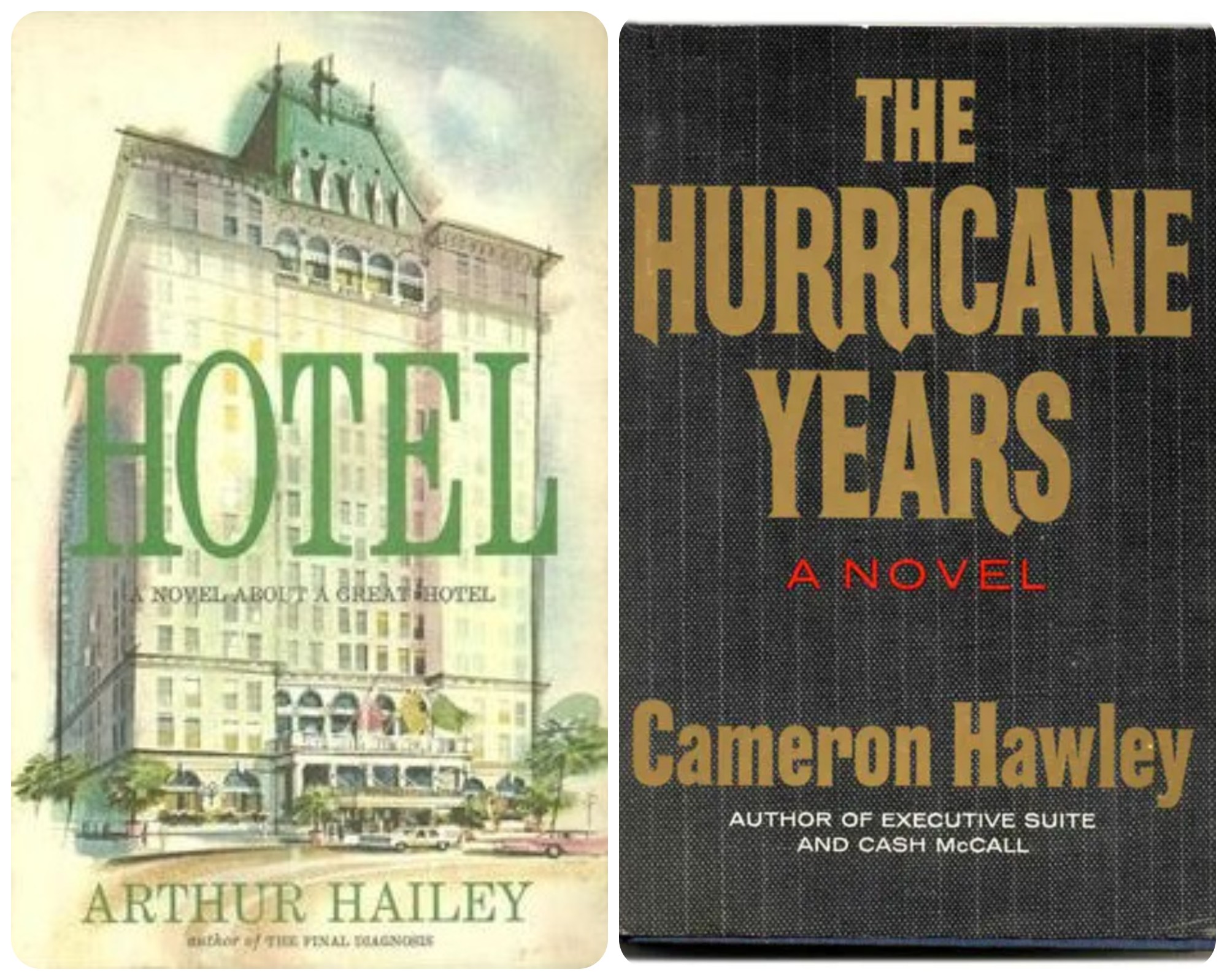
The first is Hotel by Arthur Hailey. I believe Hailey was one of the first authors to do what is now called “immersion journalism,” where extensive time is spent in a facility and then writing about it (think Nickel and Dimed). In 1964, he spent two months living at the Roosevelt Hotel in New Orleans and then wrote a novel based on the lodging’s inner workings.
Anyway, I was about 15 years old and alone at home on a Saturday night, and I decided to try a bit of clandestine drinking from my parents’ alcohol stash. Well, to quote a book title by David Foster Wallace, that was “A Supposedly Fun Thing I’ll Never Do Again.” Not only was it difficult to read while the words swam across the page, but I also passed out (I wasn’t much for holding my booze and still aren’t). Anyway, once I got over my hangover the next day, I finished the book and thoroughly enjoyed it, which led to my continued fascination with books by “industry insiders.” (And no, my parents never found out.)
My second memorable reading experience didn’t involve drinking, but it still left a scar. I was “hired” (aka coerced) to babysit for a couple who were going out with my parents, so I had to do it in their motel room. OK, so the good news is that I remembered to bring a book, The Hurricane Years by Cameron Hawley, but the bad news is that I only had 45 pages left and overestimated how long it would take to finish it. So that meant I had to spend a couple of hours before everyone returned, with nothing to read, and the TV off, lest I wake the kids. It. Was. Torture. To this day, I probably go overboard with how many books I keep in the car (plus two Kindles), lest I get stuck again with nothing to read.
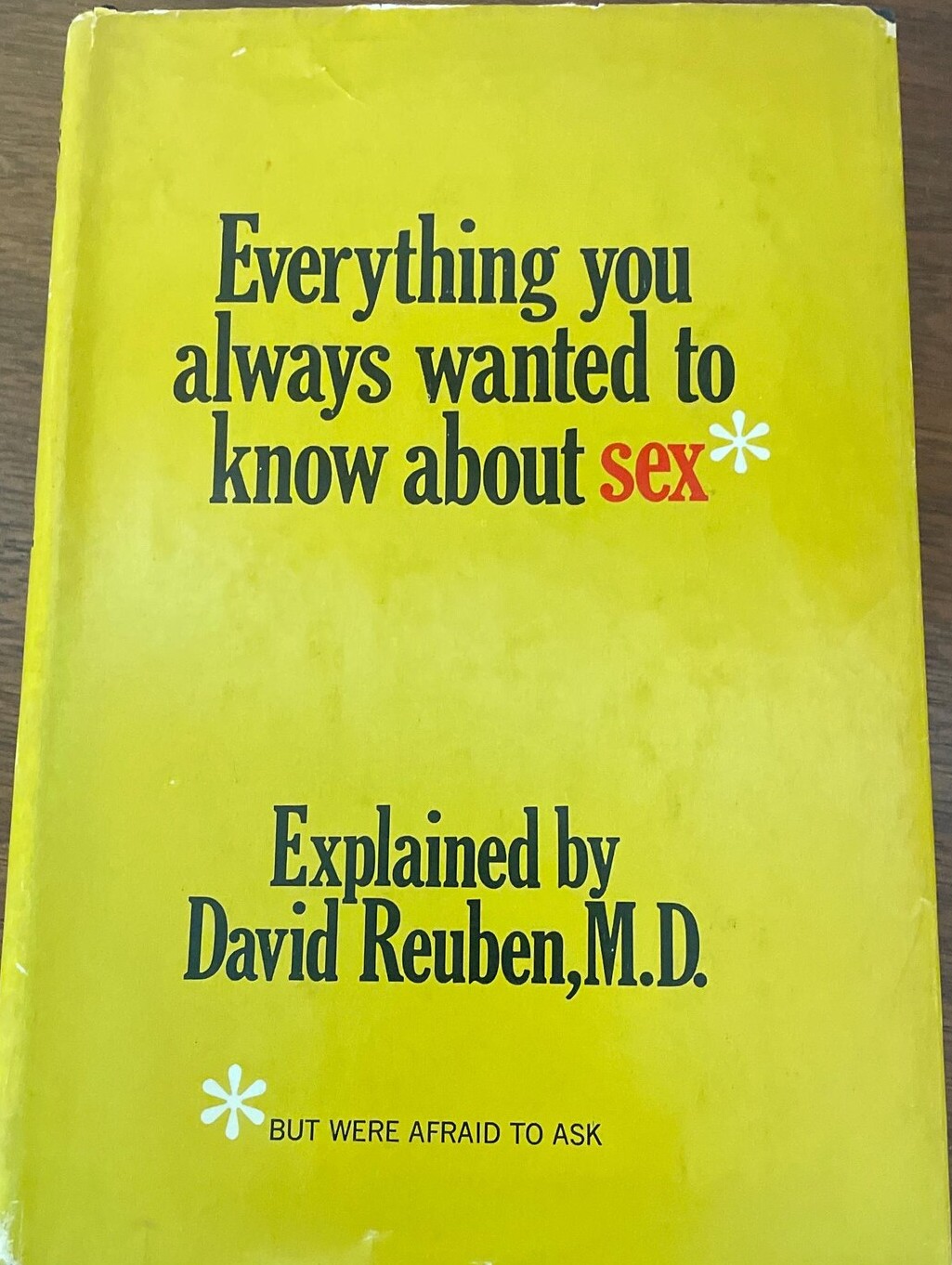
My third memorable reading experience involved my continued interest in reading about the “birds and the bees.” One day, I was heading home from school and stopped at the corner store. I was buying Buddig cold cuts when my eyes were drawn to a yellow cover on the paperback rack, and I heard the angels sing. Since all of my sex ed had come from novels, David Reuben’s Everything You Always Wanted to Know About Sex, a compendium of “expert” information, was something I just had to get my hands on. So after handing over $1.25 from my hard-earned waitress tips, I took it home in a brown paper bag and stuck it under my mattress. At this point in my teen years, I was not only attending high school classes in the morning, but then driving to Eugene for a few community college classes, returning to Cottage Grove for my waitressing shift at Pep’s Drive-In, plus trying to see my boyfriend; however, I managed to read a few pages now and then to complete my education. (Yes, it later became controversial over some of the misconceptions and views. For more information, read this article.)
Next post, I’ll cover how I learned to love (some) assigned reading and discovered more trashy magazines.
If you missed my earlier reading history posts, you can find them by scrolling a few posts down.
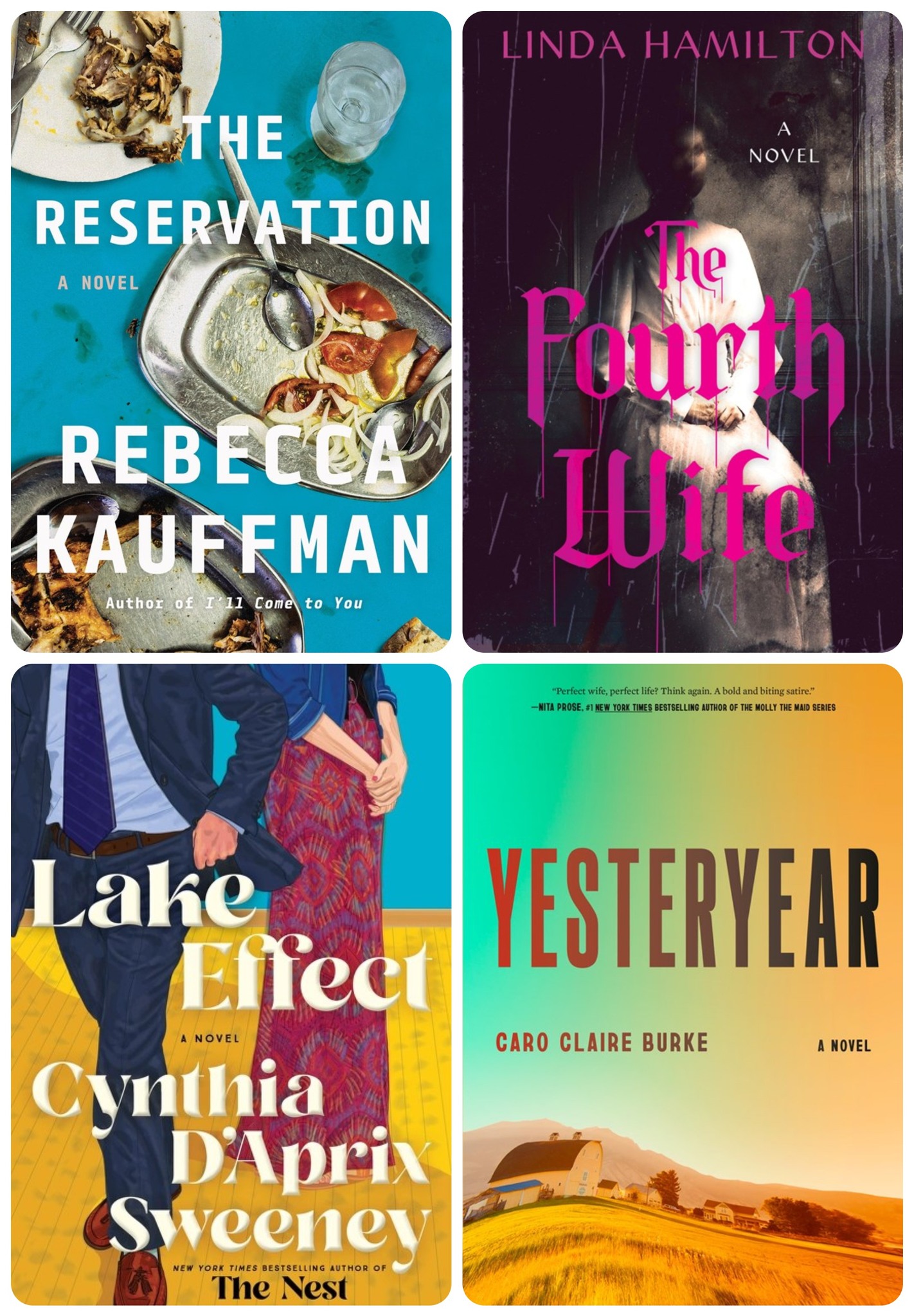
Here are my reports on four novels I read over the past few months. But first, let’s play a game. Which two books did I include in an earlier post? See, I’ll bet you, like me, won’t remember. Am I right? 😉
The Reservation by Rebecca Kauffman. Set over one evening in a high-end restaurant preparing for a special dinner featuring John Grisham, the staff discovers that most of the rib-eye steaks have been stolen. From there, the narration is from the POV of all staff as they try to work around the theft and also prepare for a busy evening. At first, I liked it as I love “back-room” stories set in restaurants, and it reminded me of Anthony Bourdain’s observations, but then it bogged down, and I didn’t really care who stole the damn meat. It had an unexpected ending that slightly redeemed the story, but overall, I wouldn’t give it a high recommendation.
The Fourth Wife by Linda Hamilton. This had me at “Mormon Gothic.” Set in 1879 Salt Lake City, a man takes his fourth wife to his decrepit mansion, where she gets to know her sister wives and encounters a ghost that seems to inhabit the house. This “Haunting of Hill House” meets “19th Wife” vibe kept me interested, and I recommend it to anyone who loved Victoria Holt, but with a twist.
The Lake Effect by Cynthia D’Aprix Sweeney. I loved this author’s debut novel about family dynamics, THE NEST, so I was looking forward to this book, which also features lots of family dysfunction. In 1977, two neighboring families are blown apart when a husband runs away with the neighboring wife (there is a heartbreaking scene when the young daughter watches them drive away), and how the ensuing divorces affect the entire families over the next 20 years. I couldn’t put this down and recommend for readers of Ann Tyler, Ann Patchett, and Catherine Newman’s SANDWICH. It’s also perfect for book groups.
Yesteryear by Caro Claire Burke. In 1978, I read The Mirror by Marlys Millhiser, a time-travel story about a young woman who looks into an antique mirror and is transported back to 1900, where she “comes to” as her grandmother (yeah, it was a little weird), which rocked the world of library patrons. I expected Yesteryear to be somewhat of a plagiarism of Millhiser’s book, but it turned out quite different. A “tradwife influencer” living the perfect pioneer life (think Ballerina Farm) wakes up to find herself on the same farm, only it is 1805. Is it a hoax, a new reality show, or did she really go back in time? The final mind-bending, unsettling ending is a little convoluted but fascinating, and it will spark a lot of discussion among book groups.