CASHIER DREAMS: Grocery Store Confessions

When I was young, one of my career aspirations was to be a grocery store cashier. I always loved working with all kinds of business machines (which is why I excelled at typing), and punching a cash register sounded like a whole lot of fun. I actually kept that dream until I met my father-in-law, who worked as a grocery store cashier for most of his life, and his hands were all gnarled from constant cash register work. Then self-checkout stands were invented, and despite my excitement about living my dream, the bloom soon faded.

But one thing that hasn’t ended is my fascination with trade jobs and I will read any kind of story where the author immerses themselves into a particular profession (usually undercover) and journals the experience. I tag them with the topic of “industry insiders.” Lest you think going deep into these kinds of jobs is boring, au contraire; they are all worth reading about.

One of the first books on this topic was Nickel and Dimed: On (Not) Getting by in America by Barbara Ehrenreich, which became a bestseller and remains popular. Her reports of working as a waitress, hotel maid, house cleaner, and other minimum-wage jobs were eye-opening. Another book on the topic, On the Clock: What Low-Wage Work Did To Me and How It Drives America Insane by Emily Guendelsberger, chronicled the author’s work in an Amazon fulfillment center (before robots took over picking orders), as a call center representative for a cell phone company (more interesting tha one would think), and in a San Francisco McDonald’s. Another fascinating book is Benjamin Lorr’s The Secret Life of Groceries: The Dark Miracle of the American Supermarket, where the author takes us behind the scenes of the grocery business, working in Whole Foods, traveling across the country on a trailer truck, visiting a pig farm, and talking to a man who was forced to work for years on a Thai fishing boat (you may not want to read about where most of our shrimp comes from).  

That brings me a new book coming out on June 9, Cleanup on Aisle Five: Essential Work, Poverty Wages, and the View from Behind the Supermarket Register by Ann Larson.

The author, a journalist, needed work during the pandemic, so she found a job as a supermarket cashier in Utah. In this memoir, she takes a deep dive into the inner workings of supermarkets and observes her co-workers as they deal with harsh conditions and poor management. Her reporting on self-checkouts was especially interesting. The main thing I took away from this is that I will never ever chastise or give a cashier a hard time — prices aren’t their fault; items ringing up incorrectly (hello, *#$%*@ digital coupons!) isn’t their fault, and if they are curt, their feet probably hurt, or they had to come to work with a terrible headache.

So I guess it’s time to give up my dream of working as a supermarket cashier and make do with typing games.

TWO FANTASTIC NOVELS

The Foursome by Christina Baker Kline: This historical novel about the marriages of the famous conjoined twins, Chang and Eng Bunker, is fascinating, informative, and respectful; the author (a distant relation to the twins) never resorts to sensationalism or melodrama. I have always been fascinated by the history of Chang and Eng, and told from the perspective of Eng’s Wife, Sarah (her sister, Adelaide married Chang), the reader is inserted into the inner workings of the marriage including intimate relations, children (21 total for both brothers!), along with the history of the time, including slavery, women’s rights, bigotry over interracial marraige, and the Civil War. I was absorbed from start to finish, and the ending was quite emotional. I have enjoyed all of Kline’s books, but this is my favorite.

Recommended for readers who enjoy Ariel Lawhon, Melanie Benjamin, and even Kristin Hannah.

Side Note: This comment is not meant to denigrate the book or make light of the hardships, but there were times the storytelling gave “Little House on the Prairie” vibes, mainly because of the farming and food-raising descriptions, and honestly, that wasn’t such a bad thing.

The Story Keeper by Kelly Rimmer. This is a compelling gothic-toned novel set in contemporary Australia. Recently divorced 50-something Fiona, a successful architect, buys her late uncle’s decaying country estate with plans to refurbish it, but various things start getting in her way, including her mother, who is adamant that she not live there, and locals who fear the place is haunted. Fiona discovers a novel that appears to be set in the house, and from there it becomes a dual-timeline story, with chapters from the book woven into the narrative. At about a third of the way through the book, it’s apparent where the story is going, but that didn’t stop me from racing through the pages. This is a perfect readalike for Kate Morton, although not quite as complicated, and fans of Lucinda Riley will also enjoy this. (To be published in late July.)

A POTPOURRI OF RECENT FICTION

Mad Mabel by Sally Hepworth. The question of whether crusty and snarky Mabel is really a killer or just misunderstood is examined in this dual-timeline story that alternates between current events and her upbringing. I enjoyed it, but there were a few too many twists, plus a plot device that I found annoying. I have enjoyed most of this author’s novels, but my favorite is The Good Sister.

American Fantasy by Emma Straub. A novel about a middle-aged woman taking a tropical music-themed cruise featuring a “boy-band” from the 90s (think New Kids on the Block) was just OK. I never felt that the promised relationship between the main character and a boy band member was developed, and for some reason, the writing was flat. However, the hellscape of being on this kind of cruise confirms my thought that I would never ever (and I mean NEVER EVER) even think of going on any kind of music cruise, even if Peter Noone and Herman’s Hermits were part of the entertainment.

The Insomniacs by Allison Winn Scotch. This was a very readable combo of relationship drama, a bit of suspense, and a touch of romance. Consider taking this to the beach this summer.

Sulfur Springs by William Kent Kreuger. Even though this author’s mysteries have been on my radar for years, I’ve never read any because, well, you know, so many books… But since this takes place in my Southern Arizona neck of the woods, and illegal immigration is a main part of the plot, I wanted to try it. It was fine. There were too many characters and twists, and I got confused (easily done), but it was a solid mystery. Perfect for fans of CJ Box and the Joanna Brady series by JA Jance.

See less

COPYCAT JACKETS: You Can Judge a Book By Its Cover [Revised]

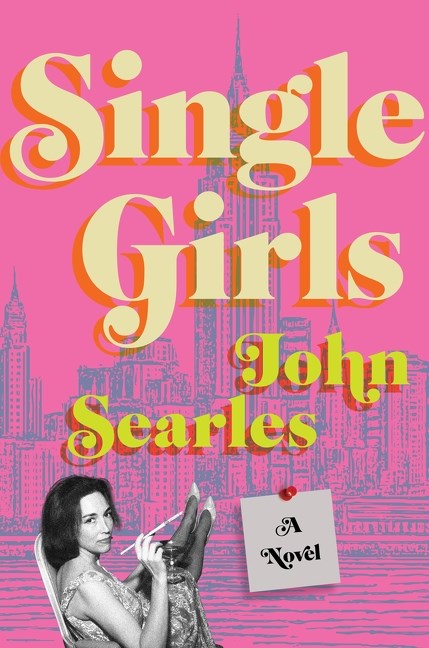
A few years ago, I created a post on similar book covers. There are more trends I could add, but one thing that hasn’t changed is the “women’s backs to the viewer,” although there may be other objects in the background besides aircraft. I could spend days culling more book covers, but I think there’s enough in this post.

I do have one more to add that intrigued me, mainly because I hated the cover art. I saw the new novel, A Good Person, and realized I had seen this particular work of art on the cover of another novel, but couldn’t remember its name. A few weeks ago, I was wandering around Barnes and Noble, and there it was! Here is the new addition to this post, and if you missed the original, it is repeated below.

How many of you have browsed the shelves at the library (pre-quarantine, natch) and picked up a book only to discard it, thinking you had read it? Don’t be so quick to judge! Check out the inside flap before reshelving, as it’s entirely possible the title has a “copycat” jacket with the publisher using a similar font and graphics similar to another popular book. It’s more common than you might think, with some even using the same photograph, as seen in the article Why Do So Many Book Covers Look the Same? Blame Getty Images. Here’s a small sample of the image used for two very different books but check out the article for at least ten books that used the same graphic.

Another interesting article, 57 Books That Look Like Other Books, is worth reading to see the various cover trends over the past few years. Here’s a sample. Hmm, I wonder which book graphic was copied.

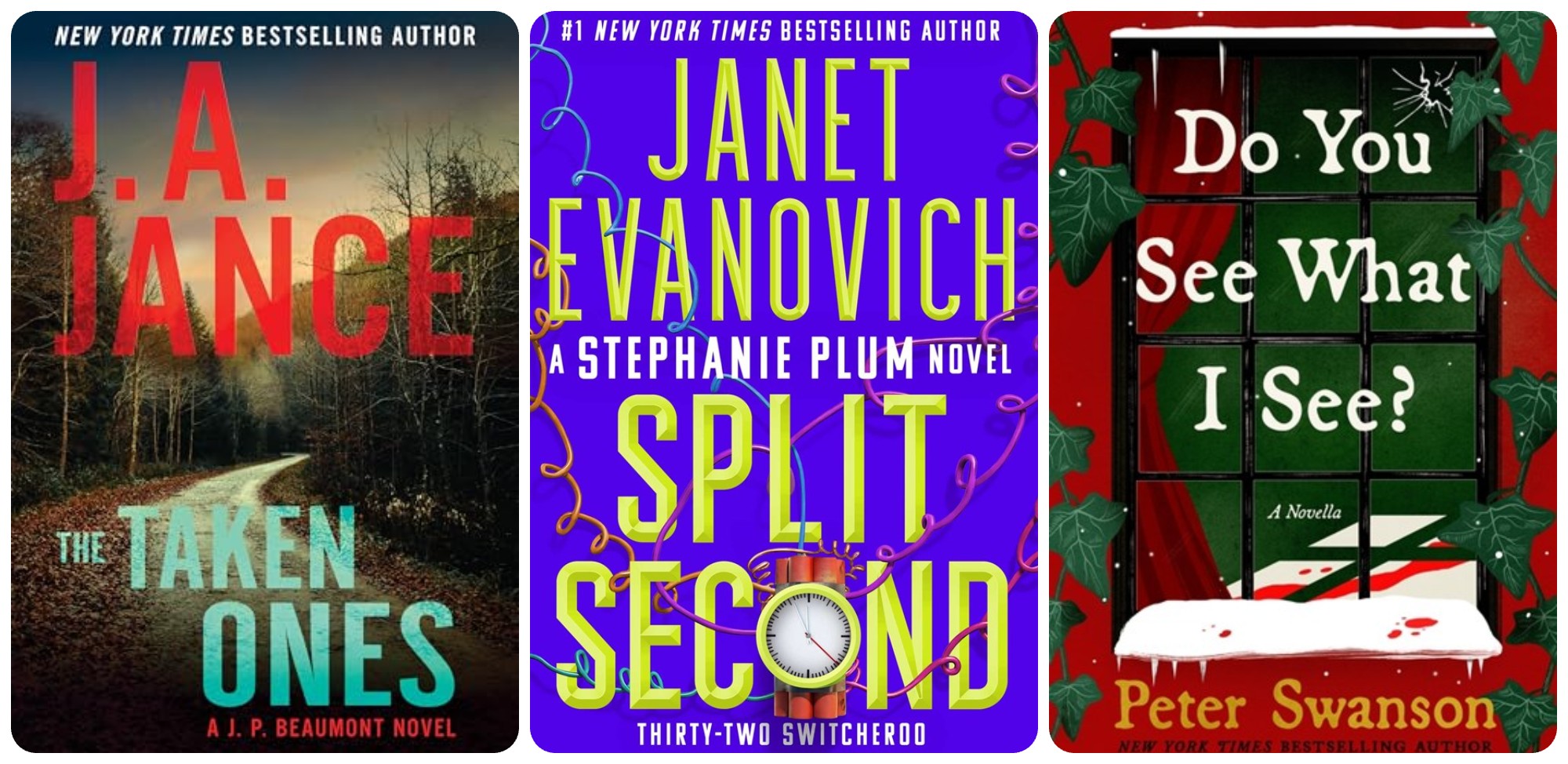
This trend has interested me for years, but it wasn’t until I read Lucy Foley’s The Guest List that I started collecting graphics of books with similar covers. Here is my collage of recent thrillers. [Update: this trend is still popular for suspense/psychological thrillers.]

Here’s another cover trend for books set in a world war (usually), featuring characters on the cover (mostly with their backs to the viewer) and planes (or a plane) in the sky.

So don’t think your mind is going south if you can’t remember if you’ve read a particular book; it’s most likely that you are picking up a book with a copycat cover!

RECENT READING: Quirky Novel and Graphic Memoir

Lost Lambs by Madeline Cash. An offbeat and quirky novel about a family consisting of mom, dad, and three daughters aged 10-17. The kids are “know-it-alls” who are smart-asses, often left alone to raise themselves as the parents are too consumed with their own problems (mainly the father trying to deal with an open marriage) to actually parent, or even buy food or keep up the house. Everyone was all very annoying, but it all came together, and ironically, “War Crimes Wes,” the 17-year-old daughter’s boyfriend, turned out to be the hero. At first, I loved it; then it bogged a little in the middle, but all came together by the final scene. Readers of Kevin Wilson’s quirky novels may want to give this a try.

See One, Do One, Teach One by Grace Farris, MD. This is a lovely graphic memoir about becoming a doctor, starting with pre-med classes, and ending with a residency in a Boston hospital. It was simple in the way each level of advancement was explained, but there was also an undercurrent of heart and of how all the apprehension about whether it was the right career decision came together. This is perfect for fans of Lucy Knisley’s graphic memoirs. This might also be a good read for those who like the current TV program The Pitt, although the memoir’s grittiness is implied rather than graphic.

TIPSY READING: My Middle Teens

Before I continue with what I read over the course of my high school years, I have a puzzle I’ve never figured out, and probably never will. So the librarian at the Cottage Grove Library was “Miss Clark,” a stick-thin woman who I thought of as “elderly,” but who was probably in her 50s, maybe early 60s. A number of years later, she retired and was replaced by her daughter, also, “Miss Clark.” OK, so if the first librarian had a daughter, why was she “MISS Clark”? Today, I wouldn’t think much about it, but this was the early 1960s!

As I headed into my mid-teens, I had read all of the Harold Robbins and Victoria Holt books I could find, so it was time to focus on more “mature” reading. During the summer between 8th and 9th grades, I picked pole beans for school clothes money and read Gone With the Wind while “laying out” in the backyard (slathered in baby oil, natch). It was tough going, mainly because the edition I was reading had double-column text, but I struggled through, immersing myself in Civil War times with Scarlett and the gang.

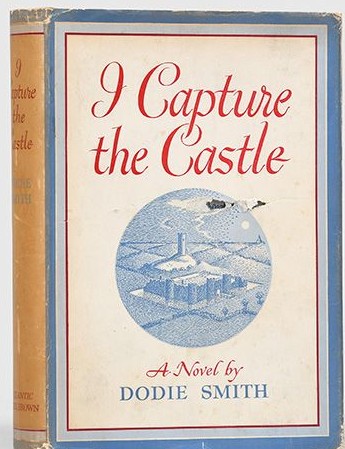
Other books I remember reading during my teen years included I Capture the Castle by Dodie Smith, which I loved because it was set in a crumbling manor and involved family drama; Marjorie Morningstar by Herman Wouk (a few years ago I loved Ann Hood’s Morningstar, a nostalgic look at her growing years, reading many of the same books I did); That Man Cartwright by Ann Fairbairn (if you can’t guess, I loved thick books); and the scariest novel ever written (in my opinion), The Haunting of Hill House by Shirley Jackson.

But there are three books that left an impression on me, two of which are because of the circumstances surrounding the setting, and the third, well, you’ll find out…

The first is Hotel by Arthur Hailey. I believe Hailey was one of the first authors to do what is now called “immersion journalism,” where extensive time is spent in a facility and then writing about it (think Nickel and Dimed). In 1964, he spent two months living at the Roosevelt Hotel in New Orleans and then wrote a novel based on the lodging’s inner workings.

Anyway, I was about 15 years old and alone at home on a Saturday night, and I decided to try a bit of clandestine drinking from my parents’ alcohol stash. Well, to quote a book title by David Foster Wallace, that was “A Supposedly Fun Thing I’ll Never Do Again.” Not only was it difficult to read while the words swam across the page, but I also passed out (I wasn’t much for holding my booze and still aren’t). Anyway, once I got over my hangover the next day, I finished the book and thoroughly enjoyed it, which led to my continued fascination with books by “industry insiders.” (And no, my parents never found out.)

My second memorable reading experience didn’t involve drinking, but it still left a scar. I was “hired” (aka coerced) to babysit for a couple who were going out with my parents, so I had to do it in their motel room. OK, so the good news is that I remembered to bring a book, The Hurricane Years by Cameron Hawley, but the bad news is that I only had 45 pages left and overestimated how long it would take to finish it. So that meant I had to spend a couple of hours before everyone returned, with nothing to read, and the TV off, lest I wake the kids. It. Was. Torture. To this day, I probably go overboard with how many books I keep in the car (plus two Kindles), lest I get stuck again with nothing to read.

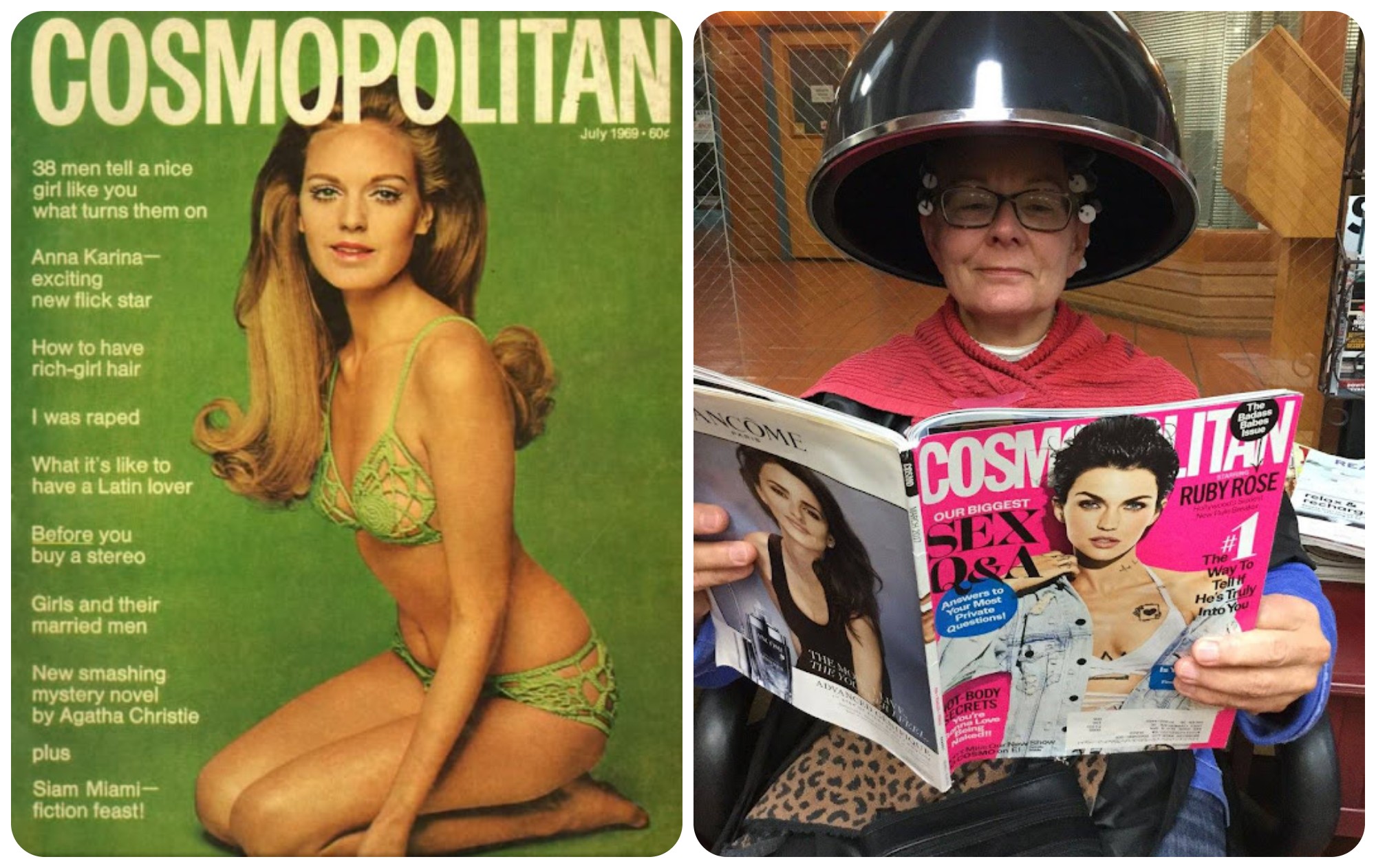
My third memorable reading experience involved my continued interest in reading about the “birds and the bees.” One day, I was heading home from school and stopped at the corner store. I was buying Buddig cold cuts when my eyes were drawn to a yellow cover on the paperback rack, and I heard the angels sing. Since all of my sex ed had come from novels, David Reuben’s Everything You Always Wanted to Know About Sex, a compendium of “expert” information, was something I just had to get my hands on. So after handing over $1.25 from my hard-earned waitress tips, I took it home in a brown paper bag and stuck it under my mattress. At this point in my teen years, I was not only attending high school classes in the morning, but then driving to Eugene for a few community college classes, returning to Cottage Grove for my waitressing shift at Pep’s Drive-In, plus trying to see my boyfriend; however, I managed to read a few pages now and then to complete my education. (Yes, it later became controversial over some of the misconceptions and views. For more information, read this article.)

Next post, I’ll cover how I learned to love (some) assigned reading and discovered more trashy magazines.

If you missed my earlier reading history posts, you can find them by scrolling a few posts down.

FICTION CATCH-UP

Here are my reports on four novels I read over the past few months. But first, let’s play a game. Which two books did I include in an earlier post? See, I’ll bet you, like me, won’t remember. Am I right? 😉

The Reservation by Rebecca Kauffman. Set over one evening in a high-end restaurant preparing for a special dinner featuring John Grisham, the staff discovers that most of the rib-eye steaks have been stolen. From there, the narration is from the POV of all staff as they try to work around the theft and also prepare for a busy evening. At first, I liked it as I love “back-room” stories set in restaurants, and it reminded me of Anthony Bourdain’s observations, but then it bogged down, and I didn’t really care who stole the damn meat. It had an unexpected ending that slightly redeemed the story, but overall, I wouldn’t give it a high recommendation.

The Fourth Wife by Linda Hamilton. This had me at “Mormon Gothic.” Set in 1879 Salt Lake City, a man takes his fourth wife to his decrepit mansion, where she gets to know her sister wives and encounters a ghost that seems to inhabit the house. This “Haunting of Hill House” meets “19th Wife” vibe kept me interested, and I recommend it to anyone who loved Victoria Holt, but with a twist.

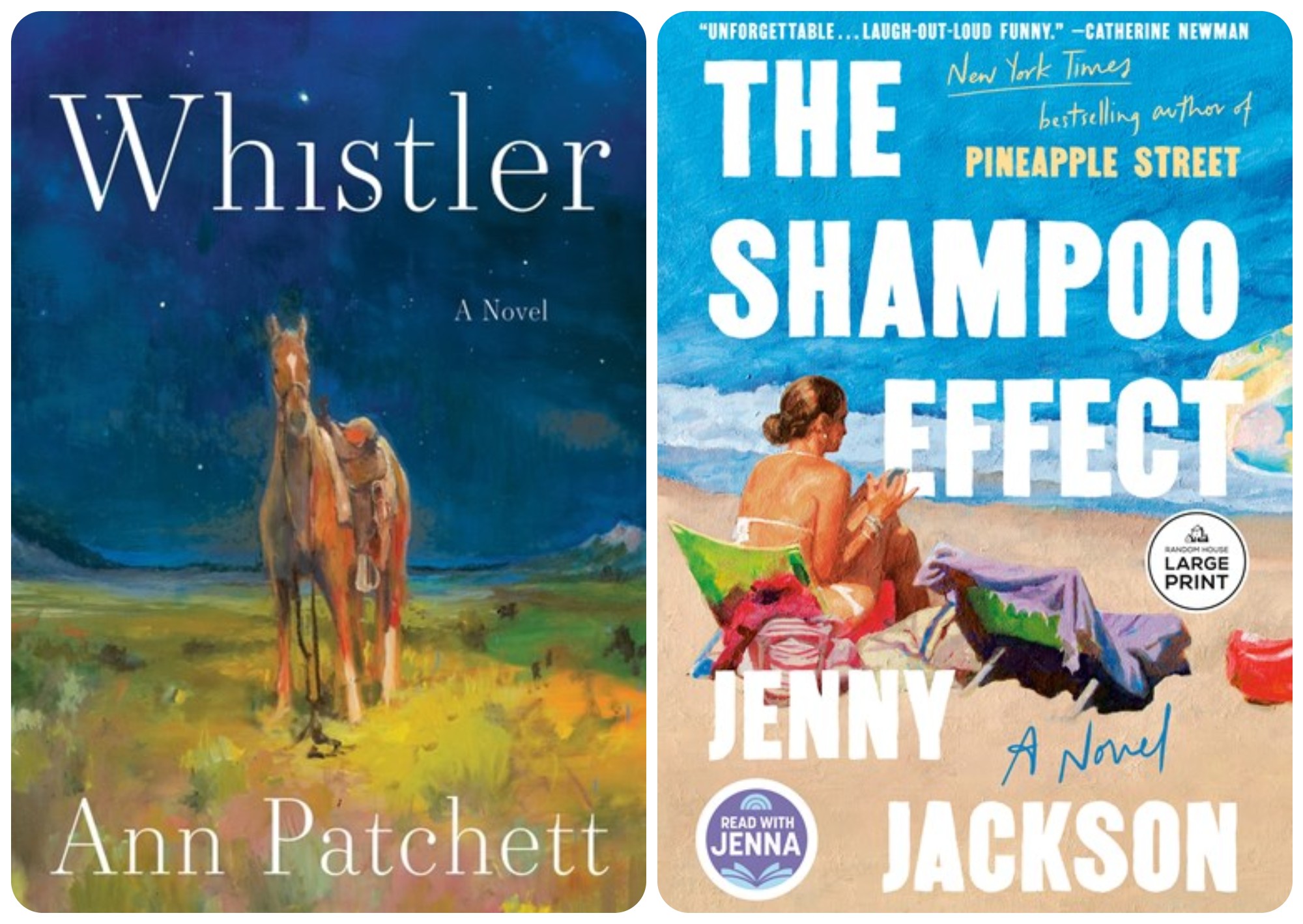
The Lake Effect by Cynthia D’Aprix Sweeney. I loved this author’s debut novel about family dynamics, THE NEST, so I was looking forward to this book, which also features lots of family dysfunction. In 1977, two neighboring families are blown apart when a husband runs away with the neighboring wife (there is a heartbreaking scene when the young daughter watches them drive away), and how the ensuing divorces affect the entire families over the next 20 years. I couldn’t put this down and recommend for readers of Ann Tyler, Ann Patchett, and Catherine Newman’s SANDWICH. It’s also perfect for book groups.

Yesteryear by Caro Claire Burke. In 1978, I read The Mirror by Marlys Millhiser, a time-travel story about a young woman who looks into an antique mirror and is transported back to 1900, where she “comes to” as her grandmother (yeah, it was a little weird), which rocked the world of library patrons. I expected Yesteryear to be somewhat of a plagiarism of Millhiser’s book, but it turned out quite different. A “tradwife influencer” living the perfect pioneer life (think Ballerina Farm) wakes up to find herself on the same farm, only it is 1805. Is it a hoax, a new reality show, or did she really go back in time? The final mind-bending, unsettling ending is a little convoluted but fascinating, and it will spark a lot of discussion among book groups.

A Few Good Memoirs

Cameron Crowe – The Uncool. If you’ve seen the movies Almost Famous or Fast Times at Ridgemont High (or read the book), then you may be familiar with Cameron. But did you also know he was a wunderkid who, by age 16, was interviewing and writing articles about (and at times touring) with Led Zeppelin, Lynyrd Skynyrd, Bob Dylan, Crosby, Stills, Nash & Young, and Fleetwood Mac, and once spent a few months with David Bowie? His memoir includes stories about being with the bands, the arc of his career, and stories about his family life. I was enthralled, but my only criticism is that it wasn’t nearly long enough, and he needs to write a sequel.

David Archuleta – Devout. If anyone remembers David Archuleta from the 2008 American Idol season, you’ll most likely remember his angelic voice singing “Imagine” (I wept). This is his story about how he, as an upstanding member of the Mormon Church, came out in 2021 as part of the LGBTQIA+ community, and how it affected his family. This is excellent in audio and is one of my favorite memoirs of the year.

Christina Applegate – You With the Sad Eyes. I enjoyed Applegate in the TV show Married With Children, and while I wasn’t that familiar with her later career, I enjoyed reading this memoir about her trials over the years with abuse, breast cancer, and her current affliction, multiple sclerosis. She is very candid and sometimes funny, but a few times was a little annoying (later in the book she talks about recently lighting a cigarette, and, sorry, I couldn’t help but be a little judgey).

Lindy West – Adult Braces. I haven’t read her earlier books, nor have I watched her TV show, Shrill, but for the most part enjoyed her story about trying to come to terms with an unorthodox marriage (that includes a third person) while on a road trip across the U.S. I enjoyed the road trip part, but I’m not sure I’m buying into her final decision.

Next up, I’m looking forward to Liza Minelli’s recent release, Kids! Wait Till You Hear This! and Lisa Rinna’s You Better Believe I’m Going to Talk About It.

The Teen Years: Phallic Towers in the Valley of the Dolls (Updated April 2026)

Thanks to everyone who is following my reading journey. If you missed my previous musings, links are at the end of this post.

valley3One day in 1966, when I was in the 8th grade, I was perusing the rental shelf (5 cents per day, if I remember correctly), when my eyes spied a book I had recently heard about, the groundbreaking Valley of the Dolls by Jacqueline Susann. When I took it to the desk, Miss Clark looked at it with her gimlet eye (and even though she was very nice, she always looked at my adult books with this kind of an “eye”) and said I needed a note from my “mommy” to check it out. What happened after that shaped my reading life forever.

But before that happened…

Gothic Love

After I finished the “teen” books in our small library, I asked Miss Clark what I should mellynread next, and she recommended Mistress of Mellyn by Victoria Holt. I wish Miss Clark were still alive so I could thank her for how she changed my life. First of all, I was so enamored of the story, setting, and shocking revelation at the end that to this day, there’s nothing I like better than a good Gothic novel with a creepy manor setting, a sense of unease, and a twist that knocks my socks off. And secondly, her help made me realize how much fun it can be to help someone find just the right book for their reading pleasure.

I went to read the rest of Victoria Holt‘s oeuvre, including Bride of Pendorric, The Legend of the Seventh Virgin, Kirkland Revels, and more. After that, I scoured the shelves for books by other authors with covers featuring terrified women fleeing manor houses with menacing towers, or other dark, foreboding dust jackets that would send chills down my spine. I read books by Phyllis Whitney, Dorothy Eden, Mary Stewart, Barbara Michaels, and anything else with phallic symbols on the cover.

iPiccy-collage gothcsYes, that’s right. Did you know that back when gothic novels were “hot,” book cover artists were instructed to create covers with towering phallic symbols? Who knew? You can read all about it in my review of Grady Hendrix’s Paperbacks from Hell.  Hmm, maybe the subliminal message went into my subconscious, which may have influenced my next reading obsession…

The Blue Years

When Miss Clark told me I needed a special note to check out Valley of the Dolls, I must have looked at her with puppy dog eyes and said something like, “Oh, Miss Clark, you’ve known me for a long time. May I please take it today?” And she relented. I was absorbed from start to finish, and, quite frankly, I can’t tell you anything about the plot or characters. I’m sure some issues went over my 13-year-old head, but I was ready to read more of this kind of book. I’m sure by today’s standards, the content would be relatively mild (and I did end up reading worse a few short months later, but I’ll get to that in a minute), but it was reasonably risqué for that time.

iPiccy-collage robbinsAfter that, it was a short coaster ride down the slippery slope to reading more smut. It wasn’t long before I discovered novels by Harold Robbins, such as The Carpetbaggers, but my favorite was The Adventurers, where I even learned a few “bad” words in Spanish. Heh.

(If you have read his books and have the time, this 2019 article about Harold Robbins is fascinating.)

Then my stepmother started watching the TV series based on Grace Metalious’ shocking Peyton Place, so how could I resist getting the book, which was described as “…a tale that includes incest, abortion, adultery, lust, and murder.” Hooboy! Right up my trashy teen alley! I bought it at the corner drugstore (for 95 cents) and inhaled it along with the sequel, Return to Peyton Place.

Next up were William Goldman’s Boys and Girls Together (the same author who would later write The Princess Bride and Marathon Man), Robert Rimmer’s The Harrad Experiment, and even Kyle Onstoff’s Mandingo (and sequels if I could find them). What can I say? If the paperback had a lurid cover, I would easily part with some of my hard-earned allowances.iPiccy-collage smut

But Where’s the Carnival?

One day during my 8th-grade language arts class, a boy who sat behind me handed me a paperback book to read, and since by now everyone has pretty much noticed I’ll read just about anything, I took it. I don’t remember the full title, but the word “Carnal” was in it (no, it wasn’t “Carnal Knowledge”), and I thought it sounded interesting. Well, it turned out to be pure explicit porn, but that didn’t bother me as much as trying to figure out why the “carnival” was never featured! Silly me, eh? (Side Note: The boy who loaned me the book seemed a little disappointed when I handed it back, saying it was an interesting story. I think he expected me to be shocked.)

(When I was doing readers’ advisory, and a parent expressed concern when a tween/teen wanted to check out a book with “content,” I usually responded that I read Valley of the Dolls when I was 13 and I turned out OK–well, I think I did anyway. I never told them about the “Carnival” book.)

But not everything I read was considered trash. Next post, I’ll get into my late teen years and how a book finally taught me the real “facts” about the birds and the bees.robin 7th grade (2)


The Very Early Years

Chapter Books

Nancy Drew and Chums

The Tween Years


Going To the Right: The Tween Years (Updated April 2026)

Thanks to everyone who is following my reading journey. If you missed my previous musings, links are at the end of this post.

Once I exhausted all of the mystery series and started finding the children’s books a little, well, childish, I decided it was time to make a run to the right of the desk where the adult books were shelved. So one day, I skulked past the gimlet eye of Miss Clark and entered a whole new world of books. At first glance, many seemed a bit beyond my ken, but it didn’t take long to discover a treasure trove of books with “teen” spine stickers mixed in with the fiction. After loading my arms for the long trek home, I soon found myself immersed in the exciting new world of teen troubles.

ipiccy teenYoung Adult Books, 1950s/1960s Style

As a dweeby sixth-grader with frumpy dresses and a home perm who so badly wanted to be popular, I found books by Anne Emery and Rosamond du Jardin a balm for my tween angst. All dealt with teen trials and tribulations, both frivolous and thoughtful, but mostly I identified with the stories where the main character was trying to be part of the cool kids’ group. Oh, and boy trouble…

Anne Emery’s Dinny Gordon series featured a teen whose career goal was to be an archaeologist, which sparked my interest in also exploring ruins and going to Egypt (spoiler alert: it didn’t happen). The series covered Dinny’s freshman through senior years, and I devoured them all. Another favorite by this author was The Popular Crowd, which I read multiple times.

Rosamond du Jardin wrote in a similar vein, and I plowed through all of her books, such as Class RingBoy Trouble, and One of the Crowd, which were all part of the Tobey and Midge Heydon series. Here is a lovely description of parents in a simpler era:

“The Heydon family resides in the town of Edgewood where Mr. Heydon sells plumbing supplies and Mrs. Heydon is a homemaker who enjoys baking chocolate cakes and lemon cream pie.”

I also read books by Janet Lambert and Betty Cavanna, and continue my interest in the medical profession, novels like Candy Stripers. Occasionally, I wandered into the nonfiction aisle and picked up books on Oregon history (Sacajawea was a favorite) and astronomy.

Mad about Magazines

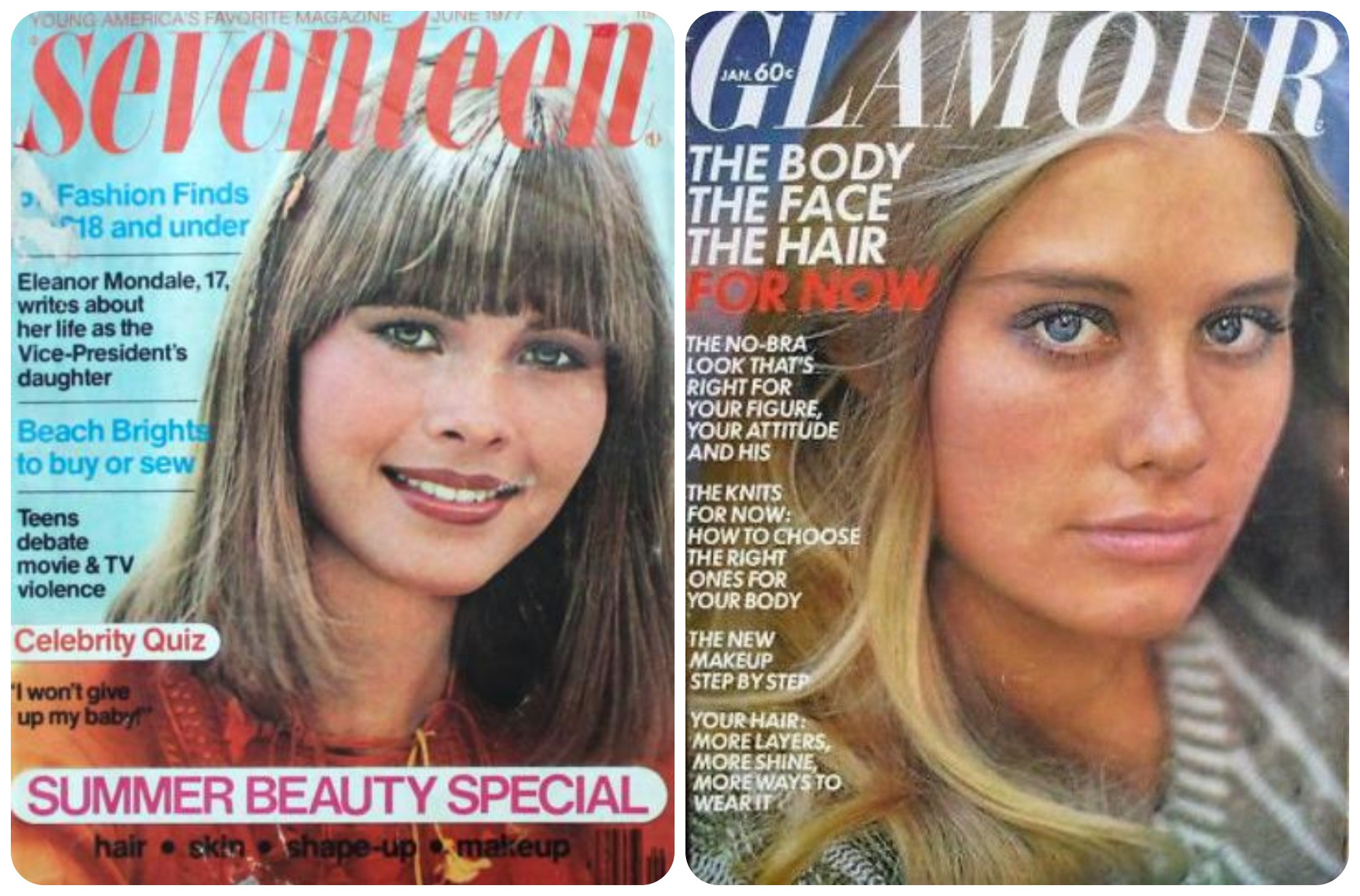
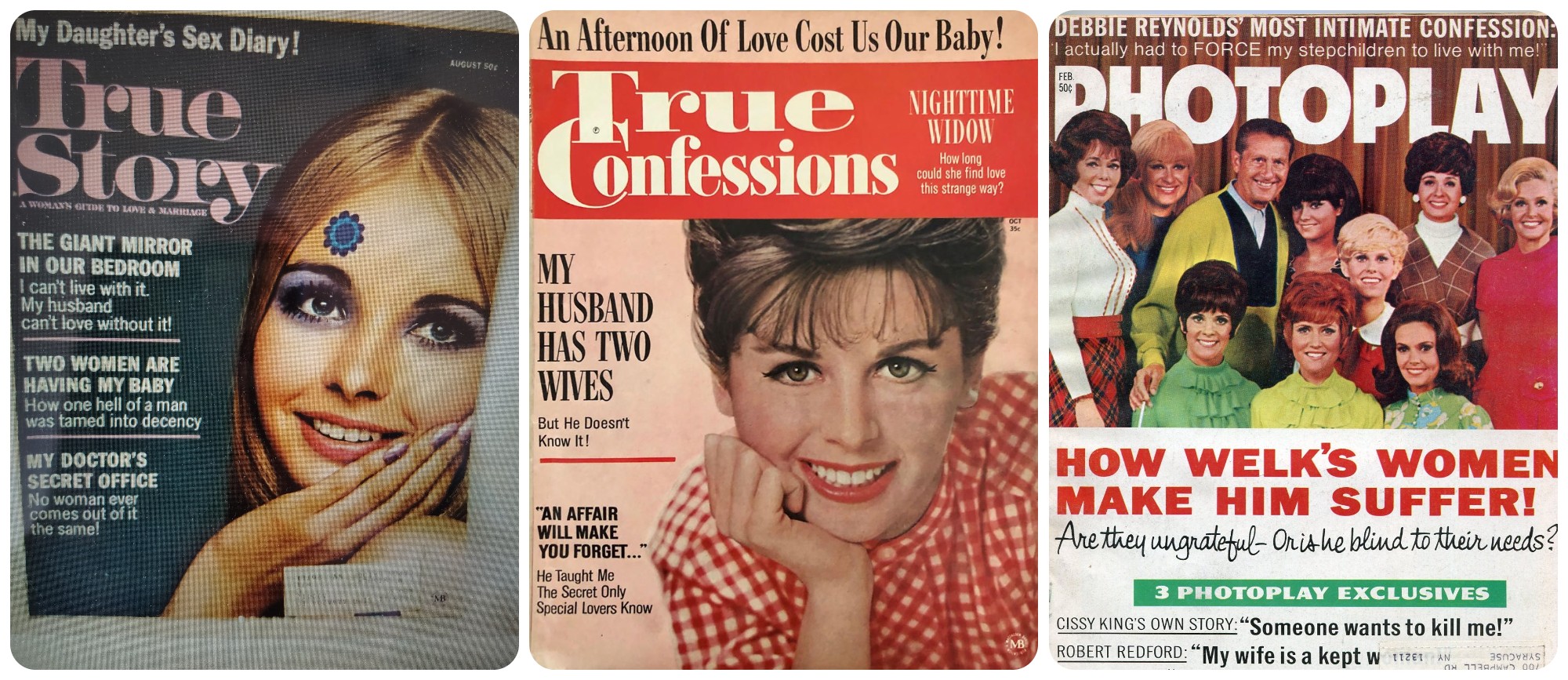
As I mentioned in an earlier post, my magazine addiction started in grade school with the distribution of the Weekly Reader, and it wasn’t long before I got hooked on the hard stuff. In 1964, the Beatles took over the imagination of tween/teen girls (and yes, I was one, although I became more of Herman’s Hermits fan), and I started noticing magazines such as ‘TeenTiger Beat16, and more. With such lurid headlines as “Beatles Weird Wishes” and “Herman’s Wild Life!” it was easy to part with my allowance so I could follow the latest about my idols.

ipiccy mags

16 Magazine was my favorite, and I remember a contest where one “lucky” Meowreader could win Herman’s (Peter Noone) snaggle canine tooth he’d had removed. (I hope no one thinks less of me when I admit I actually entered that creepy contest.) I didn’t read Tiger Beat very often (think it was hard to find), but I enjoyed Ann Moses’ recent memoir, Meow!: My Groovy Life with Tiger Beat’s Teen Idols, with lots of juicy behind-the-scenes revelations and interactions with the stars of the day.

‘Teen magazine was another fave that I read religiously. I don’t remember many of the articles, but I did lust after the fashions (especially the go-go boots) and perused the Pen Pal page to see who might have the same interests I did–you know, books, boys, and surfing–OK, so maybe I didn’t surf, but it was cool to think I could.

madI also discovered MAD magazine, and even though I’m sure much of the content went right over my head, I thought it was hilarious, especially the movie and TV show satires. I still remember my brother and me listening to the 33 1/3 RPM record insert of “It’s a Gas” and giggling uncontrollably. If you have never had the pleasure of hearing this classic, listen to it here.


(NOTE: photo below is after I discovered I could be cool when I emulated Cher’s look.)

Next up: I discover smut and the start of my love for psychological suspense. 

roibn 8th

8th grade, trying hard to be groovy

Earlier posts:

The Very Early Years

Chapter Books

Nancy Drew and Chums