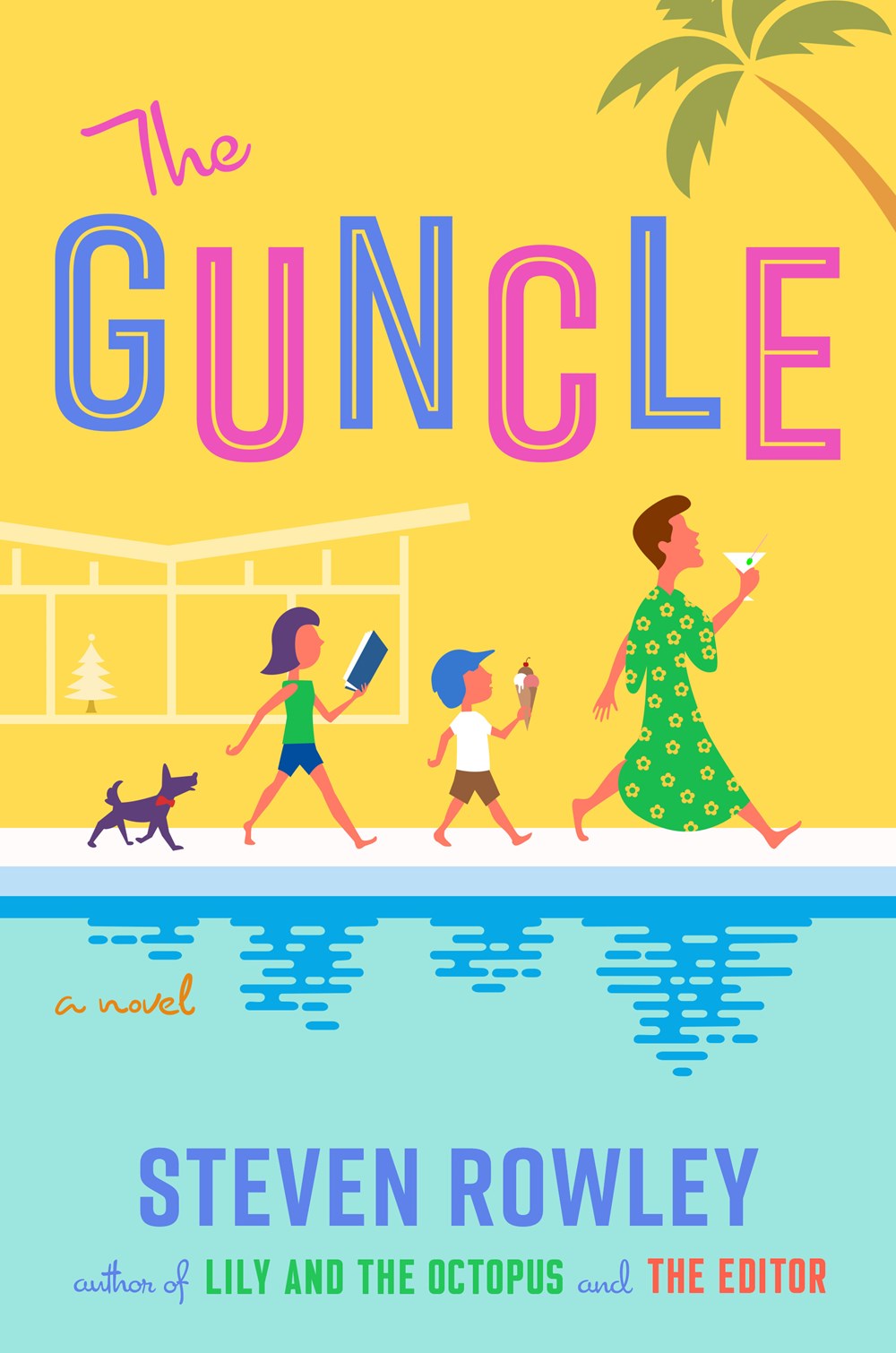
Although this novel was popular a few years ago, it didn’t appeal to me, and I’m not sure why. However, I needed an audiobook and had heard that this one was well done, so I got it from Libby. It turned out that I loved this lovely story about surviving loss and finding family. Readers who want a “feel-good” and heart-warming tale similar to The Wedding People and Remarkably Bright Creatures will enjoy this. Authors who narrate their own books aren’t always the best choice, but Rowley did a great job.
So this was an interesting read in a couple of different ways. Please forgive my rambling review.
I first read this in the 1970s, during my horror phase (which I guess I’m still in), when I read Shirley Jackson’s The Haunting of Hill House and Robert Marasco’s Burnt Offerings. I recall being impressed by how frightening this was and how effectively the setting was portrayed. For some reason, I decided to reread it to see if it affected me the same way it did 50 years ago, and here is what’s different — I don’t remember the obvious uncurrent of sexual tensions of the women, and at times, the lewdness of the house’s history. I’m not judging, I’m just surprised I didn’t remember that aspect of the storyline. However, that all being said, it was still very scary (Stephen King said it was, “the scariest haunted house novel ever written.” I’m not sure I agree with our friend Stevie, as I think The Haunting of Hill House was way scarier in its subtlety.) I did feel the anticlimactic ending went on too long.
I followed up by watching the 1973 movie, The Legend of Hell House, and it was reasonably well done, although somewhat condensed; however, the setting was perfect. (Fun fact: my spouse and I saw this at the local drive-in, probably in the mid-1970s. Near the end, the bathrooms were closed due to a sewer problem, and we had to pee so bad we had to leave before the ending, and it wasn’t until last night that I saw finale!)
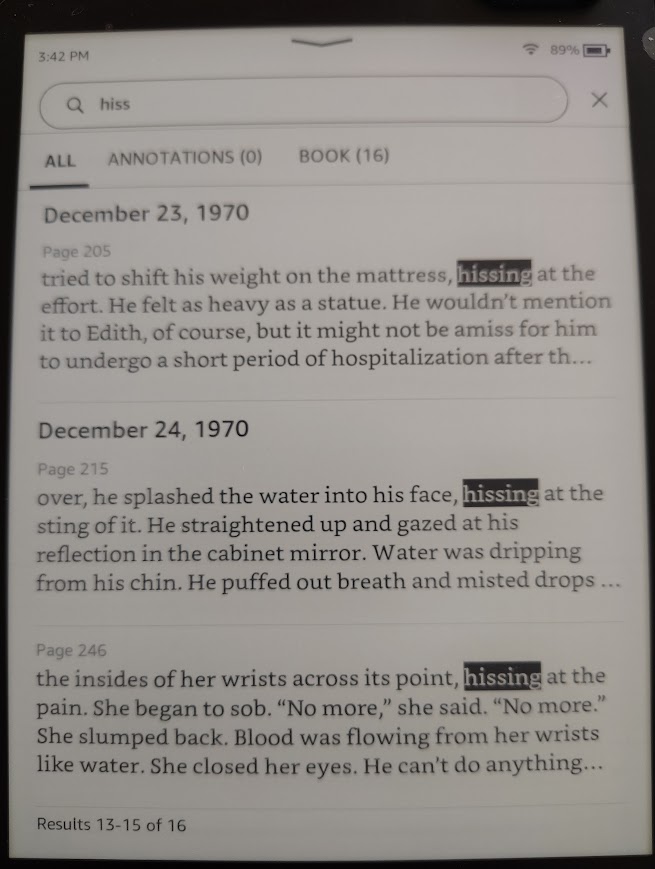
And here’s one more observation that about drove me bonkers during my recent read. Do you ever read a book and notice a repeated term or description that a good editor should have caught? In this case, the word “hiss” (or hissing or hissed) was used sixteen times according to my Kindle!
Richard Matheson also wrote the time travel love story, Bid Time Return, which was adapted into the romantic movie Somewhere in Time, starring Christopher Reeve and Jayne Seymour. (Loved the book but never saw the movie.)
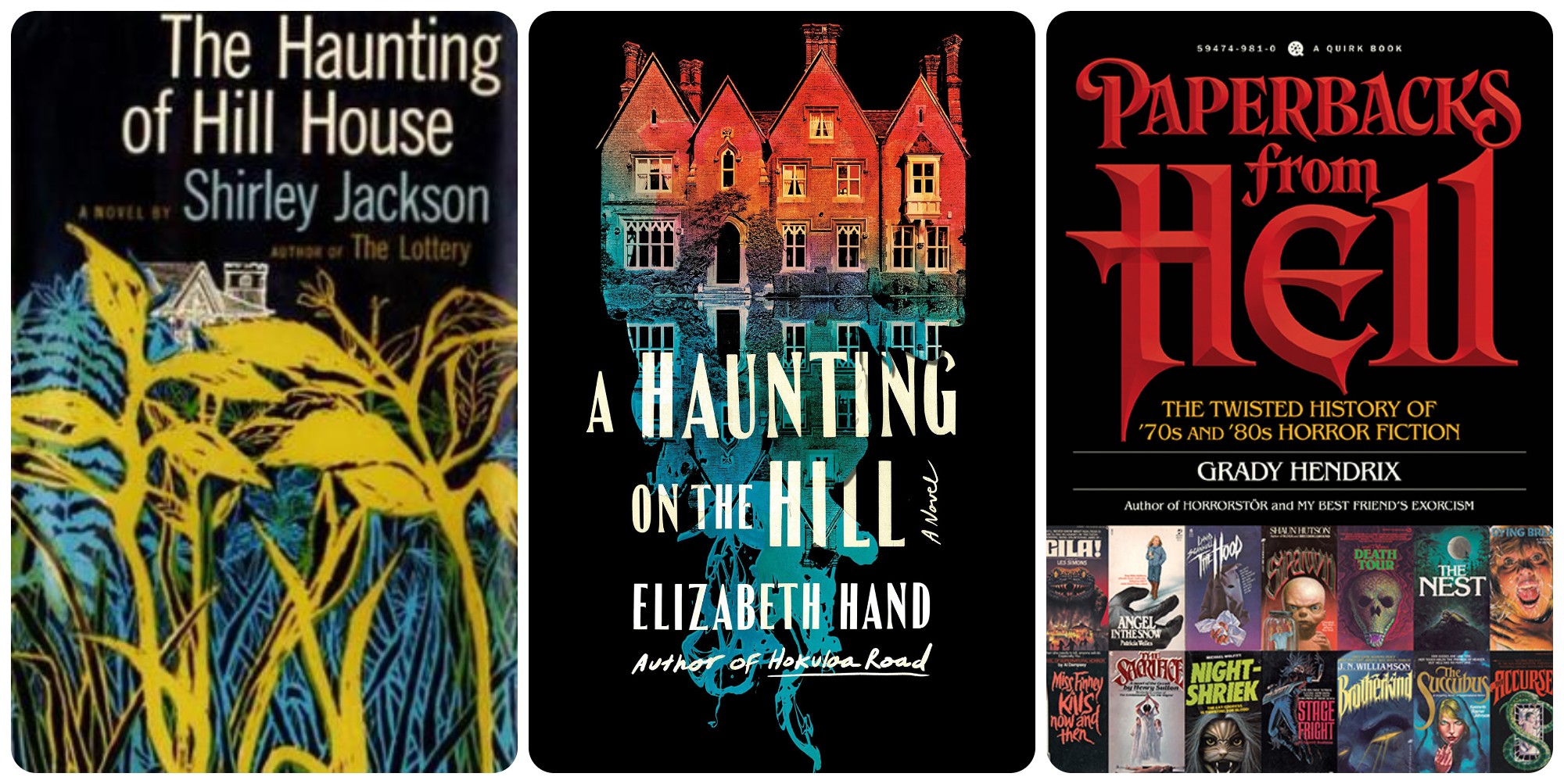
Anyhoodles, if a reader is looking for a good haunted house story, one can’t go wrong with this book as long as the content isn’t objectionable. However, for the best haunted house story ever written (IMO), you can’t go wrong with The Haunting of Hill House (and the original movie, The Haunting), and the sequel, Elizabeth Hand’s A Haunting on the Hill. For a fun look at horror novels from the 1970s/1980s, get a copy of Grady Hendrix’s Paperbacks from Hell (click on the title for my Goodreads review).
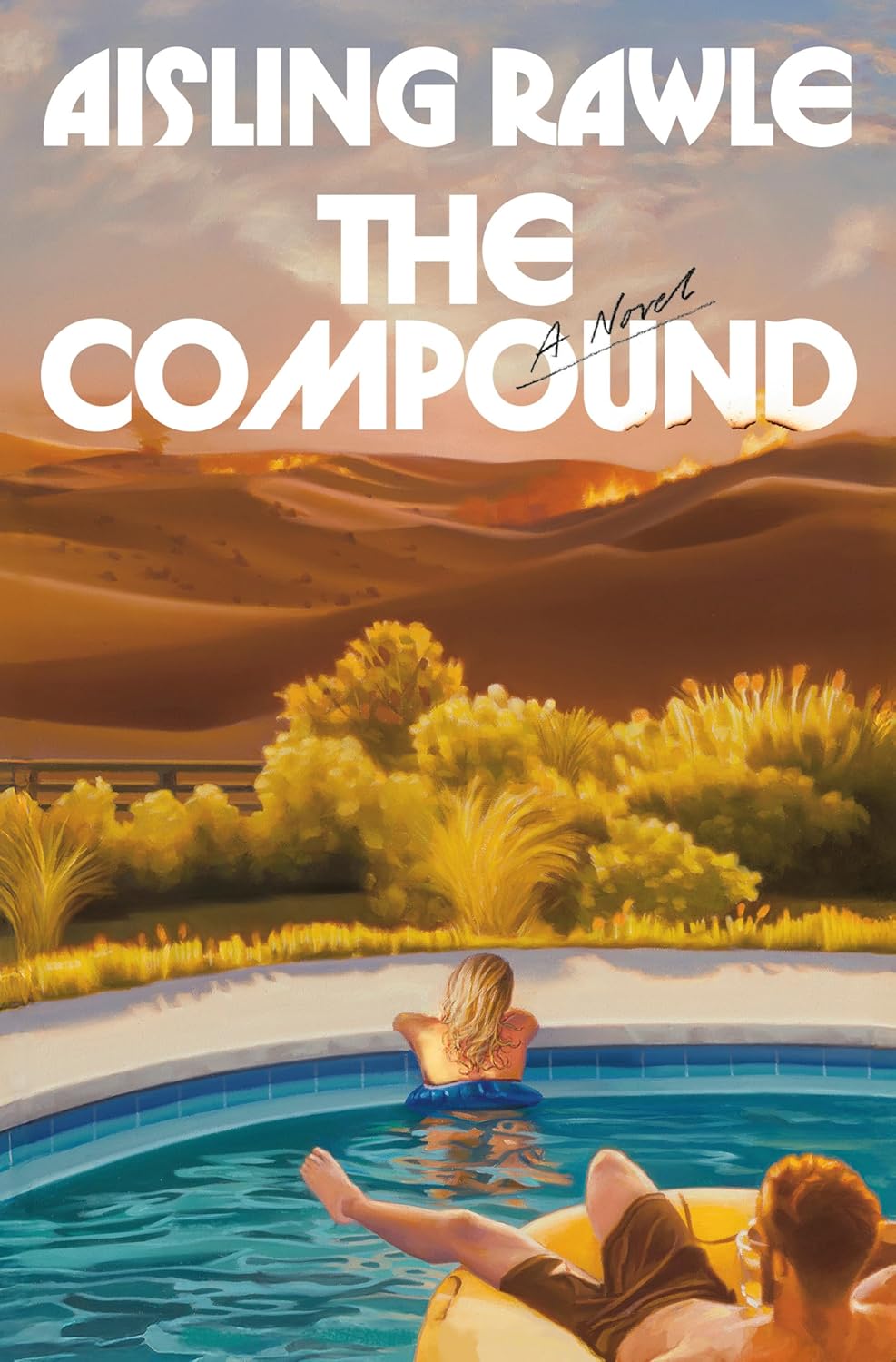
I loved the first half of this unsettling dystopian novel about a reality show that is a combination of Big Brother and Love Island, with a dash of Survivor (and some reviewers had added Lord of the Flies to the mix). I was glued to the first half, but about 3/4 through, I started getting weary of the unlikable contestants and the machinations required to stay in the game, some of which were quite brutal. I understood what the author was trying to convey about consumerism and the public’s fascination with every move of a group of relationships that become dysfunctional (and mean) in the quest to be the “sole resident” of the Compound. However, I still found it a little tedious.
That all being said, this would be a fabulous book for groups, as there are sure to be those who love this and those who feel the way I did about it, which always leads to a good discussion.
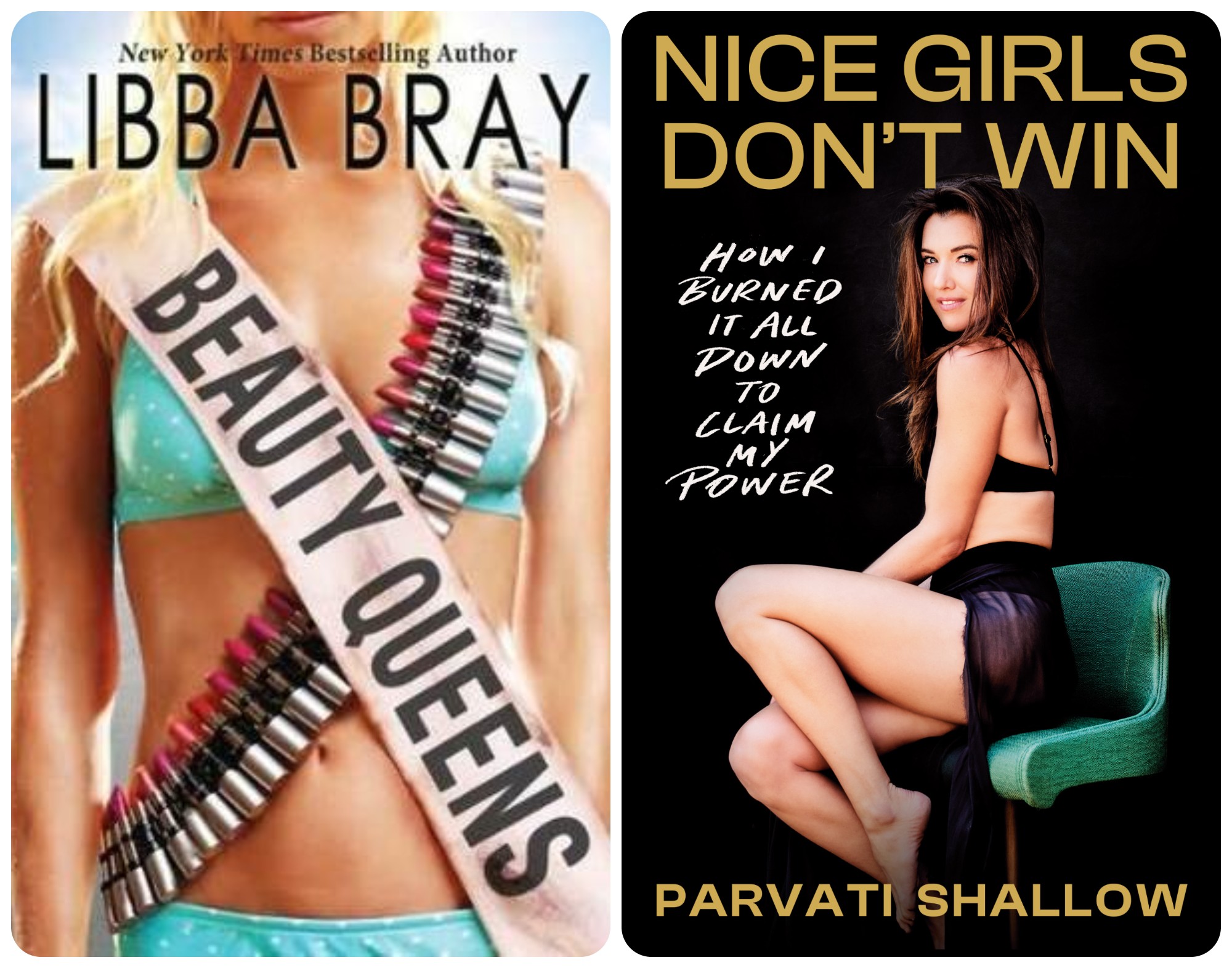
Despite its lack of nail-biting narrative, fans of The Hunger Games series may enjoy this, and those who liked Libba Bray’s Beauty Queens (especially in audio format) will likely appreciate this novel as well. For a real-life take on participating in a reality show, Parvati Shallow (from Survivor) has a recent memoir, Nice Girls Don’t Win.
I love a good celebrity memoir, especially if the author is candid and sprinkles a little dirt. Seven years ago, I wrote about memoirs, which you can read here, if you so desire. Here is a rundown of the memoirs I’ve read so far in 2025. Part 2 will arrive in a few days.
How to Lose Your Mother by Molly Jong-Fast. I read Erica Jong’s ground-breaking novel, Fear of Flying, when it was published in 1973, and then followed her career over the years. Turns out Erica was a bit of a narcissist and an alcoholic. When she started sliding into dementia, not only did Molly become her caregiver, but at the same time, Molly’s husband was diagnosed with pancreatic cancer. Compelling, although some have felt Molly got a little too whiny at times, but you know what? Molly deserved to be a wee bit chagrined over her situation.
Softly, As I Leave You by Priscilla Presley (publication date September 23). Well. This was verrry interesting. There is some repeated information from her first memoir, Elvis and Me, but this continues the story of their divorce and the raising of their daughter, Lisa Marie. Like many celebrities, there is an aggravating air of entitlement throughout, but what is most interesting is what Lisa Marie wrote about Priscilla in her book, From Here to the Great Unknown. While neither could be considered a reliable narrator, it’s interesting to compare what they said about each other — at least it is if you care about this stuff at all, and I do, I do!
Brooke Shields is Not Allowed to Get Old by Brooke Shields. Another entry into the menopausal memoirs by celebrities. It was interesting when Brooke talked about her career and life, but it got a little tedious when she delved into the “change of life” stuff; it’s like no one has ever gone through this before. If you like her, give it a try; otherwise, skip it.
Stay tuned for four more titillating stories by people who think readers want to hear their life stories. Here is a sneak peek:
This was an easy-to-read and fun look at Rick Steves’ first foray into reporting on foreign countries outside of Europe. When he was 23, he took a break from teaching piano (who knew?) and, along with a buddy, decided to travel the “Hippie Trail,” a popular itinerary in the Middle East and South Asia among young people in the late 1970s. As he traveled, he kept a detailed journal, which he found years later and decided to lightly edit the entries and publish, along with providing numerous photos and journal samples.
Despite the “white male privilege” aspects, where his self-awareness went by the wayside a few times, Rick’s journey was fascinating. And while some have criticized his writing skills and observations, one must consider his age and limited life experiences. However, I found the narrative very appealing and think it could be enjoyable to listen to as he narrates the audiobook.
If you are a fan of Rick Steves, pick this up to enjoy the beginnings of his writing and traveling career. This would also make a lovely gift, as the print book features high-quality paper and numerous photos.
After writing the above review, I came across another book with the same itinerary set at the same time period, featuring a very similar cover. Strange Bewildering Time: Istanbul to Kathmandu in the Last Year of the Hippie Trail by Mark Abley was written two years ago. I haven’t read it yet (and am not sure I will), but he appears to have had many of the same experiences as Rick Steves’s, although his perspective includes more of a reflection on the trip and experiences. The reviews are mixed, with some saying it’s well-written (the author is a poet) and some saying it’s not, so who knows.
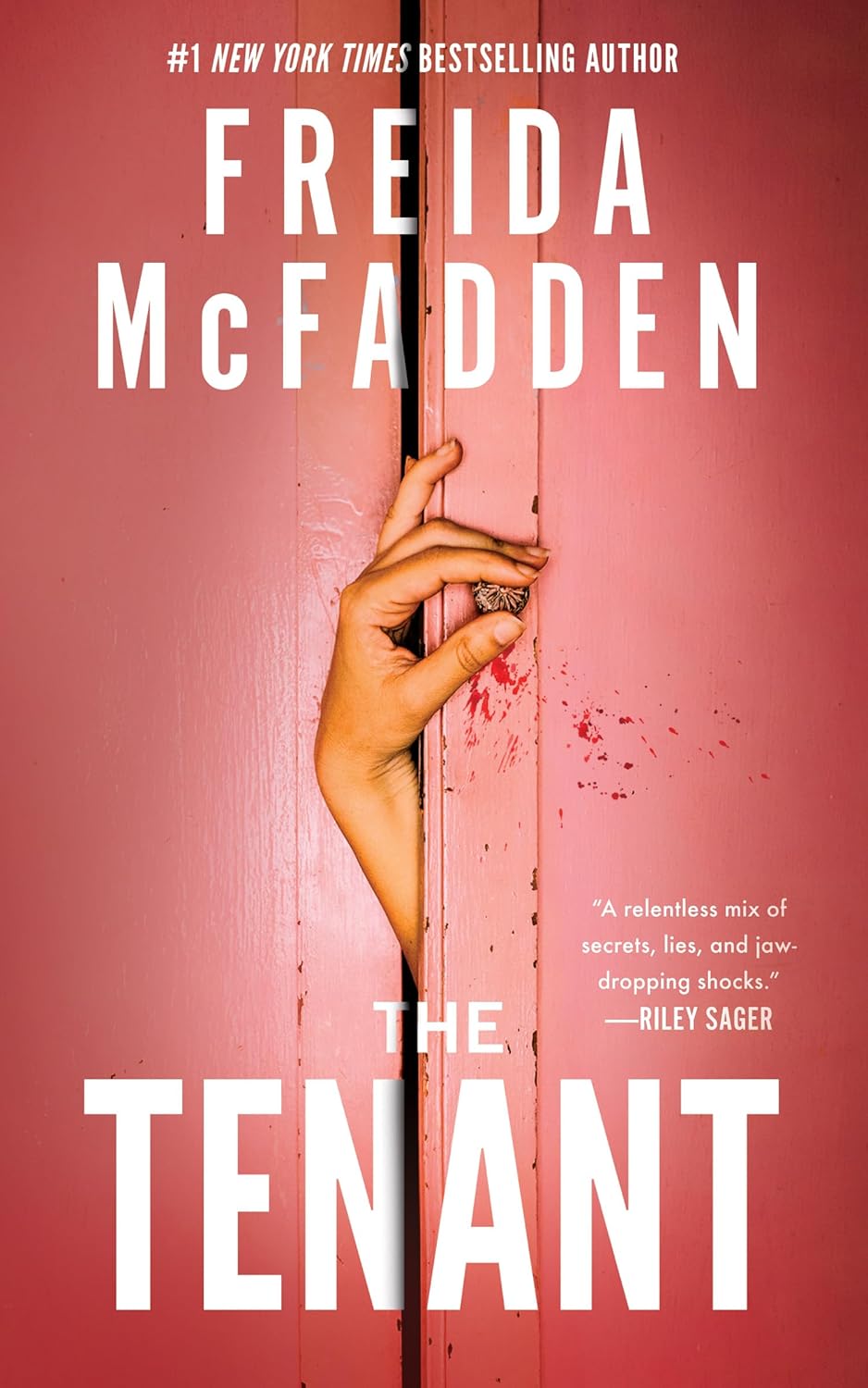
I had been meaning to read this for a few years, and since it was available as an audiobook, I checked it out. The book, with its dual timelines (1980s and present day), is set in an old roadside motel with ghosts. It read like a house afire in the first half, creating a spooky vibe through ghostly encounters and the mysteries surrounding the murder of young women. However, it then slowed down, and I admit to skimming a bit. It picked up in the last 50 pages and had a satisfying and unsettling ending.
Fans of Stephen King’s “The Shining” and Shirley Jackson’s “The Haunting of Hill House” will find the ghostly encounters in this book both enticing and spooky. At the same time, those who prefer a more suspenseful book with a touch of what could be paranormal activity, such as in books by Riley Sager, may wish to give this a try. It might be a good book to read for fans of the film Psycho and the TV series Bates Motel.
For those who enjoy this author, her next book, A Box Full of Darkness, is scheduled for publication next January.
This was my first McFadden book, and it was fine. I won’t seek out her other books, but I would read more if I had nothing else — and the chances of that are slim. 🙂 The main character, Blake, is a little whiny and annoying, but the twists were a surprise (at least to me, some say they could see them coming a mile away), and I raced through it in no time. The audio is well done with a male and female narrator for the POVs.
If you’re a McFadden fan, pick it up; otherwise, it would make a good, fast read for the beach. Alternatively, try the psychological thrillers by Green Hendricks/Sarah Pekkanen, Liv Constantine, or Shari Lapena.
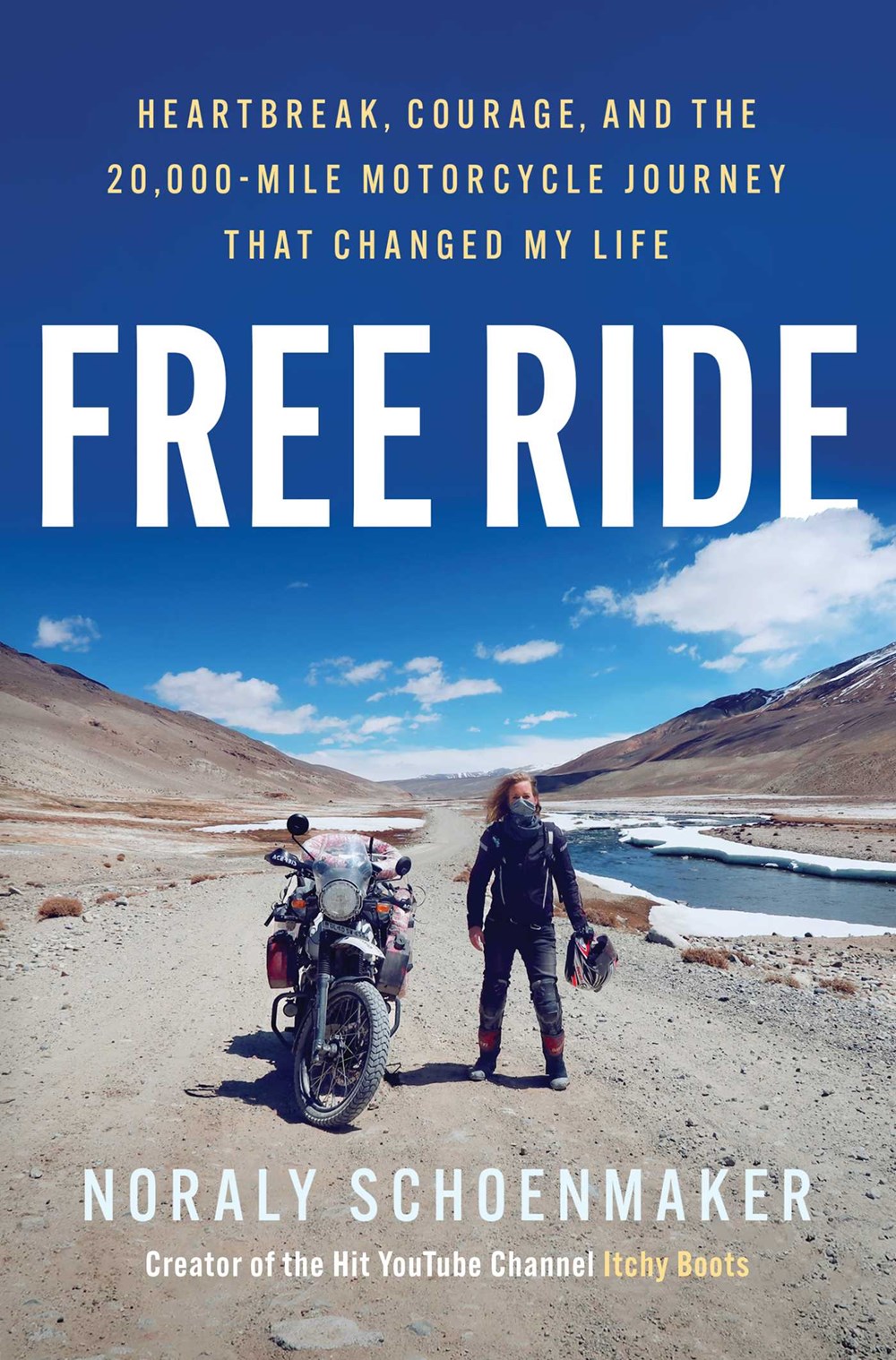
I adore travel narratives featuring solo women traveling in fairly exotic places, and this well-written memoir filled the bill. Noraly, a geologist who worked in exotic locations all over the world for a dredging company, suffers a bad breakup and is forced to sell her home. With the funds, she embarks on an epic motorcycle journey, taking her from India to Myanmar, Thailand, and on to the extremely remote sections of Iran, Afghanistan, and more former Soviet bloc countries I can’t name without looking them up. Traveling for nine months and over 22,000 miles, she suffers from mechanical breakdowns, gets into precarious situations in uninhabited areas, and meets many kind people who are always willing to lend a hand. As she traveled, she filmed the journey and established a YouTube Channel called “Itchy Boots,” which now has over 2 million subscribers.
I read an advanced digital copy with no photos (although I’m unsure if the print book includes any), so I’m off to explore her videos.
Other notable books featuring intrepid female travelers include “One Year and a One-Way Ticket” (click on the title for my blog post) by Danika Smith and “Tales of a Female Nomad” by Rita Gelman.
This is billed as a sequel to “Fool Me Once,” the first book in the Sami Kearse detective series, but it bears no resemblance to the first book, so don’t feel like you have to read it to understand what’s going on.
That being said, I’ve been a fan of Coben’s since his first book, “Tell No One,” and while I’ve missed a few along the way, this wasn’t quite up to his usual standards. First, I tried this in audio, but the narrator became a little overwrought at times, so I switched to the print book.
Secondly, while the plot was convoluted with a few surprises along the way, it became a little confusing; however, it all came together in the end, even though it was somewhat implausible (I won’t go into further details lest I spoil the twists). Coben did leave the ending open for another book in the series, so watch for that in the next few years.
[This comment doesn’t apply to the book at all, but I thought it was funny that he used the word “thrums,” a Wordle puzzle solution (thrum) that many were flummoxed by, as they had never heard the word, but many replied that it was because they didn’t read pot-boiling thrillers. 🙂 )
Travel narratives are one of my favorite nonfiction topics, regardless of the author’s destination. I recently read two travelogues written by single females traveling solo with mixed results.
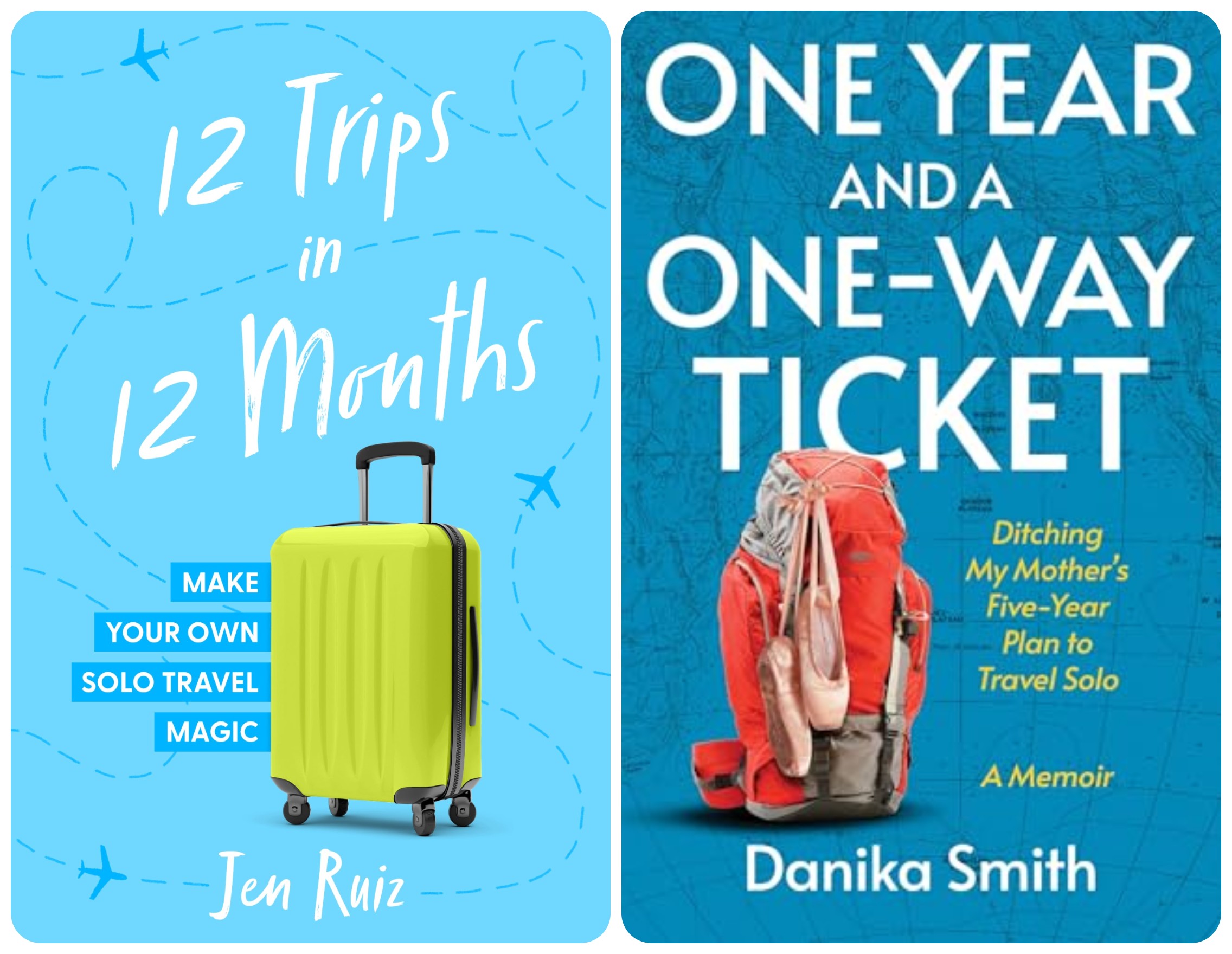
Jen Ruiz’s 12 Trips in 12 Months outlined some fascinating destinations, and Jen is a good writer, BUT… while her travel experiences are enjoyable, her sense of entitlement and attitude as an “influencer” turned me off. Maybe it’s a generational thing, but the last straw was her rant near the end of the book about how one should be able to use accrued “sick leave” from a job for reasons other than being sick (like using it for a travel day). When I used a sick day, it was at least a “stay home” day and not boarding a plane for an overseas trip. Even if I did head out for a trip, I certainly wouldn’t be shouting it to the world.
Danika Smith’s One Year and a One-Way Ticket was much more appealing, with good writing and many fascinating experiences. This well-balanced journey of self-discovery and travel experiences (marked by bouts of angst) was intriguing and never dull. Because I’m of an older generation, I gave her the side-eye a few times at her judgment (especially when it came to relationships), but all turned out well, and she came away with a sense of her self-worth.
Danika’s journey is similar to Elizabeth Gilbert’s Eat, Pray, Love, only more interesting and less self-indulgent. I recommend this to readers who liked a good travelogue featuring solo female travel, such as Rita Gelman’s Tales of a Female Nomad, Suzanne Roberts’s Bad Tourist, and Blythe Robinson’s America the Beautiful?.






 ROBIN'S BOOKS