
Here are my reports on four novels I read over the past few months. But first, let’s play a game. Which two books did I include in an earlier post? See, I’ll bet you, like me, won’t remember. Am I right? 😉
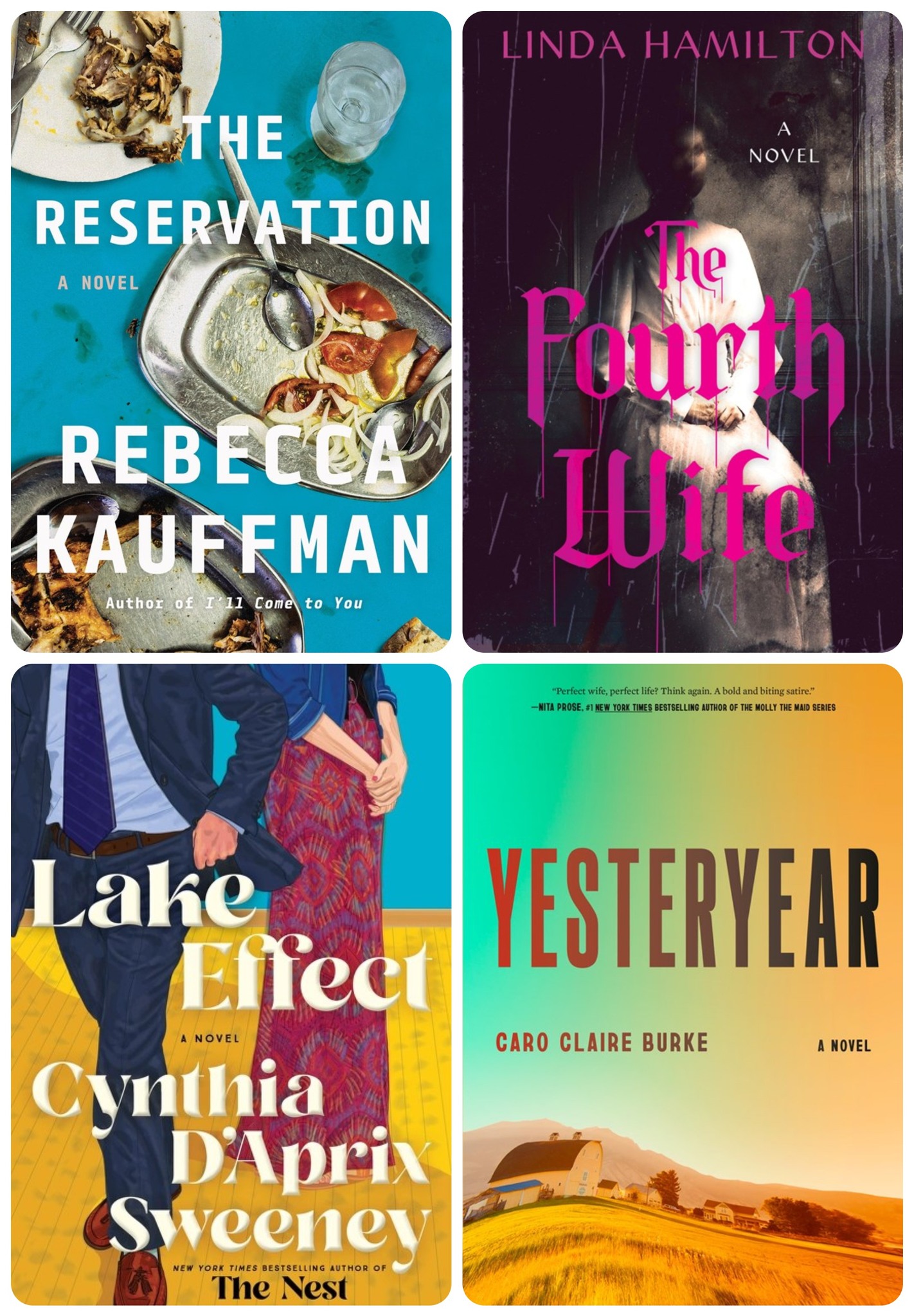
The Reservation by Rebecca Kauffman. Set over one evening in a high-end restaurant preparing for a special dinner featuring John Grisham, the staff discovers that most of the rib-eye steaks have been stolen. From there, the narration is from the POV of all staff as they try to work around the theft and also prepare for a busy evening. At first, I liked it as I love “back-room” stories set in restaurants, and it reminded me of Anthony Bourdain’s observations, but then it bogged down, and I didn’t really care who stole the damn meat. It had an unexpected ending that slightly redeemed the story, but overall, I wouldn’t give it a high recommendation.
The Fourth Wife by Linda Hamilton. This had me at “Mormon Gothic.” Set in 1879 Salt Lake City, a man takes his fourth wife to his decrepit mansion, where she gets to know her sister wives and encounters a ghost that seems to inhabit the house. This “Haunting of Hill House” meets “19th Wife” vibe kept me interested, and I recommend it to anyone who loved Victoria Holt, but with a twist.
The Lake Effect by Cynthia D’Aprix Sweeney. I loved this author’s debut novel about family dynamics, THE NEST, so I was looking forward to this book, which also features lots of family dysfunction. In 1977, two neighboring families are blown apart when a husband runs away with the neighboring wife (there is a heartbreaking scene when the young daughter watches them drive away), and how the ensuing divorces affect the entire families over the next 20 years. I couldn’t put this down and recommend for readers of Ann Tyler, Ann Patchett, and Catherine Newman’s SANDWICH. It’s also perfect for book groups.
Yesteryear by Caro Claire Burke. In 1978, I read The Mirror by Marlys Millhiser, a time-travel story about a young woman who looks into an antique mirror and is transported back to 1900, where she “comes to” as her grandmother (yeah, it was a little weird), which rocked the world of library patrons. I expected Yesteryear to be somewhat of a plagiarism of Millhiser’s book, but it turned out quite different. A “tradwife influencer” living the perfect pioneer life (think Ballerina Farm) wakes up to find herself on the same farm, only it is 1805. Is it a hoax, a new reality show, or did she really go back in time? The final mind-bending, unsettling ending is a little convoluted but fascinating, and it will spark a lot of discussion among book groups.
 ROBIN'S BOOKS